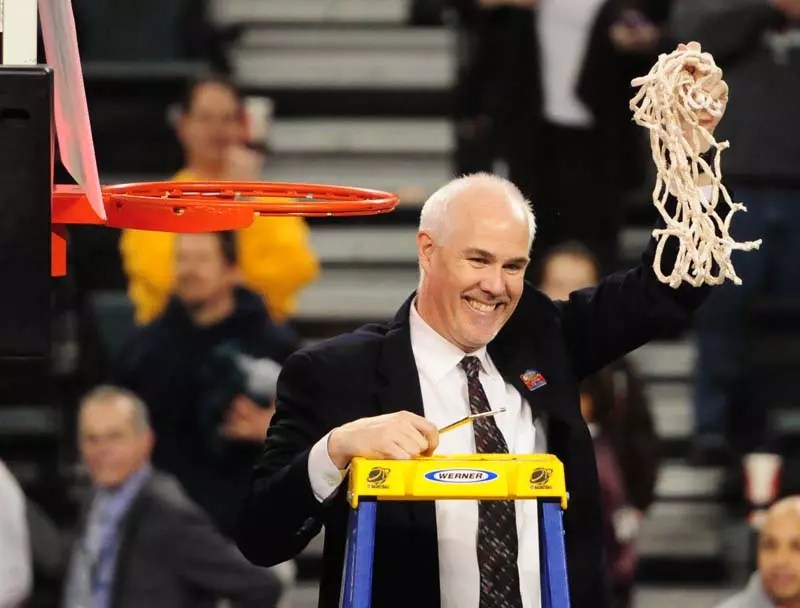
I wanted to have something out early in the week on a couple of other topics, but the last two months with St. Bonaventure men’s basketball has culminated in a crazy week.
I have recreated this post four times. Now that the team is done for the season, I think I have my sweet spot to get this out.
Let’s just make this clear – I am far from an insider, and do not have a significant connection to an insider, either. In some ways, I see that as the best thing possible in this situation to allow me to comment, because being away from the center of it means that if I’m totally wrong about everything, it is not going to bring any harm to the program, or to create a useless online beef.
Let’s go point-by-point on my feelings about the whole story.
It’s easy to point out the challenges of recruiting at Bonas (remoteness and size, in particular), but Bonas makes up for this deficit with the great culture of the school and the program. There’s an immediate camaraderie between alumni that connects the 33,000+ that share that bond. I’ve run into people in different outposts of the country (usually spotting them because they’re in school gear), and if they have a tie to the school, they’re quick to point it out. Of course, the men’s basketball program is central to the vibe of the “Bona Bubble”, even when the team is not very good. It’s something that students throughout most of the history of the school have learned to understand quickly, and rarely does it leave them once they depart from the school.
Schmidt may not be an alumnus, but he figured out the culture of the university almost immediately, which has always been essential to being successful at the school. Schmidt is a graduate of Boston College, a much larger Jesuit Catholic school in Boston, Massachusetts. (As someone that has attended both types, there is a noticeable difference between the culture of Jesuit and Franciscian schools). That is tricky, especially given that there is a bit of a “we’re a special breed” mentality by the Bona community.
Schmidt also recognized the purpose of the surrounding community. He took a moment to make meaningful comments about the Olean area in the press conference after the 68-63 loss to Dayton that ended the season and his time at Bonas. Normally, I’m not going to do this, but this seems like the right moment to do so.
“Basketball is the fabric, it’s the heartbeat. Expectations are high, but it’s a good place with good people, and you gotta make sure that you become a part of the community. To me the biggest thing… that’s the biggest advice when I first got here. You know, like you gotta be an Olean, Allegany guy, and you gotta be a part of the community, because that community, in Olean and Allegany, it’s prideful. Those people think that Olean is the best place in the world. You can’t talk negative about it. It’s like you gotta be one of them. And one of them is good. I take pride in telling people that I’m an Olean guy, that I’m a Bartlett guy… that’s just what you’ve gotta be. The next guy that comes in, he has to embrace that Olean tough loyalty, commitment, and understand that basketball is everything to that community.”
This wasn’t just coachspeak. Schmidt absolutely lived this. Sure, he made a lot of money doing the job, and leveraged his way into raises several times using the possibility of moving to another school as his bargaining chip, but that is what people do – maximize their earning potential while they can. Ultimately, he never went anywhere, even when the other schools may have paid more. He didn’t just stay for a while, either; there are only 13 NCAA Division I coaches that were in their current job when Schmidt was hired in 2007.
I never really had any significant interaction with him, but it’s impossible not to run into him or anyone else in the community from time-to-time. He, his wife, and three boys were active members of St. John’s Church; there were multiple times he worked the beer tent when the church had its Festa Italiana, and he seemed perfectly content helping out and just being a part of the fabric. His two youngest sons won a state basketball title at Olean High School. He has hosted the American Cancer Society’s 716 Coaches vs. Cancer Golf Classic in Olean at Bartlett Country Club for years, which is particularly notable in that the media and other Division I schools in the area are located in and around Buffalo, and the three Division I campuses (Canisius, Buffalo, Niagara) are all at least 90-minute drives from Olean. He would also talk up people that he didn’t need to in as mundane places as Country Fair just because they loved the program. This became his community, as much as anyone else that lives around town. He understood where Bonas fits in this community, and what it means to be here. He just got it.
Bona prides itself on its’ basketball tradition, but there is a tendency to only focus on the big accomplishments and miss some of the gaps in between. In the 30 seasons prior to the arrival of Andrew Nicholson, the Bonnies had been to the NCAA Tournament once, in 2000. At that point, nine players had been named All-Americans, but the last one was an Honorable Mention in 1983, and the last one who showed up on the actual teams was Bob Lanier in 1970.
Schmidt managed to give the school two Atlantic 10 regular season championships, two Atlantic 10 Tournament crowns, 3 NCAA Tournament appearances, and 4 NIT appearances (not counting the one they turned down in 2024).
If you’re around long enough, opinions on you will end up all over the place. Some of his former players have said off-the-record to friends and associates that he is very rough on the team, to the point of them not enjoying being on the team. Meanwhile, former players like Tyler Relph, Denzel Gregg, and Dion Wright have been some of the most vocal supporters of Schmidt and his legacy during the past 10 days. There was some buzz about conflicts with a certain local media outlet at times, but he has always granted interviews to the local media. Some fans were always quick to question his decisions, especially that in his later years at Bona of not utilizing his bench very much. Still, success quiets those issues, and Schmidt had plenty of it.
Obviously, the heat has been aimed at the team’s General Manager, former preeminent NBA insider and ESPN personality Adrian “Woj” Wojnarowski.
Woj is as big of a supporter of the University as they come. He’s an example of the lure of being a Bonnie, especially when it comes to men’s basketball – he’s a 1991 graduate, and the program during his time here had a record of 39-73. He did write some scathing columns about the program during his time interning at the Olean Times Herald as an undergrad, but he’s shown a ton of pride in being an alum since he departed. I recall watching the early parts of the 2021 NBA Draft, where the #1 pick was Cade Cunningham from Oklahoma State; Woj casually dropped in his reporting on the pick that Cunningham was the first #1 pick for the franchise since 1970, when the Pistons selected “Bob Lanier from St. Bonaventure University.” The ESPN studio crew joked immediately afterwards about his constant ability to bring the school up in any possible situation. They were spot-on; it was far from a gimmick for him. He would come up to campus for multiple games a year, and ESPN cameras frequently spotlighted him in the crowd during the team’s NIT Final Four game at Madison Square Garden in 2022.
The rumor is that Woj and Schmidt stopped speaking somewhere between Christmas and New Year’s this year. Coming into the job, Woj was extremely complimentary of Schmidt, but at that point, it had only been a donor-coach relationship; it can easily become a much different dynamic when you are coworkers. The 2025-26 team had the first class of recruits from the Woj era; supposedly, Woj was upset about the playing time some of the guys he brought in were receiving.
As you know by now, Schmidt announced to the media after the final regular season game last Saturday (March 7th) that he was retiring, with the caveat that he would come back into coaching for the right job. To me, that is not someone that is choosing to completely retire. Reports state that the situation culminated with Schmidt allegedly being brought in last week to meet with the Athletic Director, Bob Beretta, and Woj, and being told he was not being brought back next year.
The anger the past few days over Schmidt’s retirement / dismissal has been aimed mostly at Woj. Woj may be as connected as anyone in basketball, but had no experience in player personnel before coming home to Bonas. He and Schmidt seem to have been on different pages in terms of recruits, as the guys Woj supposedly brought in did not seem to be what Schmidt wanted playing in his system. When a relationship like that is in its early stages, being on separate pages is bound to happen. That being said, communication is key in any job.
A lot of people criticized Woj for not making an appearance at the final regular season game at the Reilly Center, especially since it had already been on the front page of ESPN.com earlier that afternoon that it was Schmidt’s last home game. Supposedly, he was watching the game from his office inside the Reilly Center on the internet. He also did not appear at the Atlantic 10 Tournament in Pittsburgh this week.
Many people have been snarky about it all, especially him watching the regular season finale in his office, but I personally think that it was a good decision by Woj to not appear in the arena bowl. The fans that were supportive of Schmidt would have booed Woj mercilessly. It would have taken away from Schmidt; the night should have been only about Schmidt, and thankfully, it ended up being that way.
This year went far from what people hoped. A good nonconference season (11-2) was countered by a 4-14 record in conference play, its worst season since 2007-2008, his first at Bonas. It was also their first last-place finish in the conference since then. There was a lot of anger on social media from fans, as well as in the arena, where the students chanted “Fire Schmidt” during a 77-73 loss to George Mason at the end of January.
One of the themes out there about this whole situation was, “It was handled poorly, but it was also time for him to go”, with the insinuation that he lost his ability to coach in the modern NCAA landscape. I feel people forget that they were probably watching the team get wiped off the floor at the Reilly Center by Kent State in the NIT on March 18, 2025. Yes, less than a year ago, they made a significant postseason tournament. It was not a great final game for the season, but getting a home game in (let alone getting into) the NIT means it was a good campaign relative to most schools in Division I, even when compared to schools from conferences with similar strength.
I find the narrative around this whole season to have been a bit ridiculous. I sent a few goofy texts at the end of losses to a couple of friends, but only in jest. Bad seasons happen; it’s a part of sports. One season should not affect your overall feelings about the work that has been done, and the fact that the discourse reached the point of changing coaches was over-the-top, given that the previous season was pretty successful.
The fact that it all went down as a public relations mess is a big problem. One of Bonas’ core competencies as an institution of higher learning is the Jandoli School of Communication, which hosts the journalism program. For the second time in two years, Bonas screwed up the PR game with its most publicly visible arm. (Fumbling the message about opting out of the 2024 NIT was almost as bad.) The athletic department needs to figure out how to not do that next time an issue comes up, because it suggests that they do a poor job with educating the discipline.
Mind you, Woj himself has not always put his best foot forward in public. Remember when he was suspended in July 2020 by ESPN for replying to an email from Missouri Republican Senator Josh Hawley that criticized NBA Commissioner Adam Silver with a profane response? Woj apologized, the suspension was lifted, and life moved on; but the fact that he did it to a senator representing a state nearly 1,000 miles from where he was living using his company e-mail (and via e-mail at all) does not strike me as the best way to show the prestige of his Bona diploma.
No one should be really surprised that Schmidt was the one who left in a power struggle with Woj. Woj has been a big-money donor for years, is infinitely more visible in the media and in basketball circles, and is well-connected with the big donors at the school. Meanwhile, Schmidt is supposedly making $1.7 million per year at this point. I have no clue about the annual budget, but I’m somehow betting that he was paid a lot more than the entire outlay for the Franciscian Institute, which is one of the more notable things about the University’s identity. Basketball is big money any more, and it brings in revenue from different sources, including television contracts with CBS Sports Network, ESPN, and the USA Network, but I’m sure that Schmidt’s paycheck stands out to a lot of people elsewhere in the school.
I saw the potential of Schmidt leaving as a possibility in the last couple of years. If he left and was replaced by a coach making half a million, that frees up a ton of name, image, and likeness (NIL) money to pay the players. Of course, that is negated when you are paying someone not to be there, as there is reportedly one year remaining on Schmidt’s current deal, but eventually, that money is off the books and there’s more money to give players. Good coaching is definitely important, but you also need the talent to compete.
Hopefully, the move didn’t cause problems to offset the potential shift in funds. There were people floating out there that some donors, sponsors, and even members of the school’s board of directors were thinking of ending their investment in the program after this all went down. There’s even been a political angle floated to this story that I’m not going to dignify any further. That’s really the last thing we need – politics finding its way into another otherwise simple pleasure. All it does is unnecessarily muddy the waters.
All this said, I feel the real culprit is the college basketball landscape. In retrospect, this should have become obvious to me at the end of the 2020-21 season. The team won the Atlantic 10 regular season and postseason titles, and was a 9-seed in the NCAA tournament. The starters were all juniors, and returned the following season; however, the rest of the team entered the transfer portal within days of the season ending. That was the first year where players could transfer from one Division I school to another without having to sit out a year. After the 2021-22 season, literally everyone left. Jalen Adaway graduated, and everyone else transferred, including the walk-on, as ridiculous as that sounds.
The name, image, and likeness (NIL) rules first became a factor in college basketball during that 2022 offseason. They definitely affected Bonas, as much as any school. A friend of one of the starters from that team that was also a coworker of mine at the time told me that Bonas had offered that player a mid-five figure amount to stay for his final year of eligibility; the player instead chose a school in one of the Power 4 conferences that offered at least triple what Bonas did. (If you give it some thought, you probably can figure out which player I’m referring to.) Most college basketball players aren’t going to play professionally; given that, they’re going to jump at that money while they can. The opening of transfer rules in 2024 to allow for unlimited movement without sitting a year between stops have only made the frequency of shifts between schools worse, because now guys will go as soon as something better is out there; the only players that have stayed beyond two years at Bonas lately are the walk-ons.
Schmidt may have lost a large chunk of his competitive edge with the changes in college basketball. First of all, it’s very hard to implement an intricate offensive system with a new bunch of players every year. Secondly, you’re not developing players, as they’re headed to the portal the second their situation changes. Of course, the team also can choose not to renew scholarships, and that happened in quite a few situations, as well; guys that might have hung around in the past and become serviceable as an upperclassman were told to go find somewhere else to play. Finally, and most fatally, you don’t get the opportunity to instill the University’s wonderful culture, which may convince some players to stay if the paydays between the two schools are somewhat close.
The dynamic of the Atlantic 10 has changed a lot, too. The league is still just below the Power 4 conferences in terms of the strength of its teams from top-to-bottom; however, the gap between the biggest conferences and everyone else has increased greatly over the past decade. Since the league settled into place in the early 1980s, Temple was always the top of the class. They left for a football conference, just like West Virginia, Penn State, Rutgers, Charlotte, Virginia Tech, and, most recently, Massachusetts. Xavier and Butler (after one year!!) left for the Big East in 2013. St. Joe’s and Rhode Island are nowhere near as dominant as they once were. The league had an 11-year stretch where at least three teams made the NCAA tournament that ended in 2018; there hasn’t been a single season with three bids since. The most dominant year that any team from the league has enjoyed in the past 20 years was the 2019-20 Dayton squad; of course, that season ended early because of COVID.
That gap is going to continue to widen in the current structure of college basketball. The biggest schools set their schedules so they either play other large schools or creampuffs in their nonleague games. The NCAA’s formula for determining the relative strength of teams in comparison to one another across leagues was also changed in 2018 to favor the larger conferences – which correlates with the decreased number of tournament bids for the Atlantic 10. Bonas also has large scheduling issues. This year’s North Carolina game was the only one in the past two seasons against a Power 4 school. The most logical Power 4 school to play, Syracuse, hasn’t been on the schedule in seven years. There’s been a Division II team scheduled each of the last two seasons. Traditional rivals Niagara, Canisius, Buffalo, and Siena are usually in the bottom quartile of Division I rankings. It adds up to a lack of exposure, and a lot of players want to be seen, as much as anything.
Woj has stated he has an idea of where to go with all of this, despite people questioning his abilities in his current role. In an interview last year, he stated that he viewed the school’s place in the current college basketball landscape as somewhere up-and-coming players could get a chance to showcase their abilities on their way to going to Power 4 schools. That has been the case with several of the players in the last five years, and will probably be a thing again next year, as I anticipate the entire team will go into the transfer portal for one reason or another.
This all has wiped away the notion of the amateur student-athlete that the system has tried to sell as part of the NCAA image for years. Realistically, a lot of schools found ways to pay their players under-the-table; that part of the facade officially dropped with the installation of NIL. Also, most schools require you to finish your final 60 credits at their school to get a diploma. Meanwhile, over half of the Division I players that were on a roster last year entered the transfer portal, and, of course, that does not include the athletes that ran out of eligibility (I’m not betting that a majority of them graduated).
Ultimately, this adds up to a sobering realization that we as fans may have to change our standards for the expectations around Bona basketball. Three tournament bids in 10 seasons (including the lost COVID year) was a run we may not see again in the near future. Things can change with future rule tweaks, but as things currently stand, the school is facing a steep uphill battle, and it looks like it’s going to be a lot harder for the school to get back to where it was, regardless of the coaching situation.
There’s another big problem, too – the interest in the program may dry up for a lot of people that are more ardent supporters. The casual fan will go to games regardless, as it is about the experience of being there. On the other hand, there may be fewer diehards. It’s happened to lots of mid-major schools; some schools with diehard fanbases (VCU and Syracuse, for example) have played to half-empty home arenas at times this year.
Personally, I had little interest in the Bonnies this year because I lack a feeling of attachment to the players. I watched the results, but I did not attend a game, and I have not invested two hours to sit in front of the games on ESPN+. As odd as it sounds, to me, professional sports have become the place to grow with a team, as the roster doesn’t change anywhere nearly as dramatically from year-to-year. It’s hard to feel loyal to a bunch of athletes that are mercenaries rather than part of the school’s tradition, and they probably feel no ties to the school, either.
As for the future, the names being floated out there as the most likely replacements for Schmidt are alumni Mike MacDonald and David Vanterpool. There are intriguing ideas to both of them, as well as drawbacks. MacDonald currently coaches at Division II Daemen College in Amherst, just outside of Buffalo; he has led them to national prominence, including six Division II tournament berths in the last eight seasons. He has also had them ranked #1 in the country in 2025 and #4 as of this moment. On the other hand, he coached nine seasons at Canisius between 1997-2006, only had two winning seasons, and never finished higher than 4th in the Metro Atlantic Athletic Conference (MAAC), a less-talented league than the Atlantic 10. Still, people evolve, and skillsets improve; it could easily work better this time. Vanterpool, an excellent former player that had a cup of coffee in the NBA, has been an assistant coach in the NBA the last 14 years, and was even touted as the best choice by Bill Simmons, the founder and CEO of “The Ringer”; Simmons knows the NBA inside-out, but is not as passionate or as familiar about the college game. Vanterpool is likely in the same boat, too, having never coached at the level.
Ultimately, you never know how this will all play out. Maybe Schmidt finds another job and gets a few more years to follow his passion; if not, he can retire knowing that his presence made a difference at Bonas, and unless there’s something I don’t know, he’s got a nice chunk of change to pass down to his kids. Bonas could also find another diamond in the rough to coach, and the school continues being a success in the wild landscape of college basketball. Even if it all goes wrong, the school is going to be okay – as an academic institution, it may be in its best shape ever, with a record student enrollment number this year. The team may be a rallying point for everyone, but ultimately, it will not make or break the school.
Television has provided us with a ton of characters over the past 25 years that create a complex set of feelings for the viewer, but whose morality is generally misguided, at best. A personal favorite character of mine is Mike Ehrmentraut from the “Breaking Bad” universe. As the prominent fixer for the underworld of Albuquerque, he is calculated, cold, and unaffected by most of what he encounters. However, when you watch the prequel series, “Better Call Saul”, in companion with “Breaking Bad”, a different picture comes into place – I see him as trying to forge a path to personal redemption for past mistakes, as twisted as the path was. His arc is about atoning for his past choices, and his personal goal is to protect his son’s family, even to his own peril.
Mike’s end in “Breaking Bad” is not in a wild shootout or a gruesome event; instead, he ends his story by asking Walter to leave him alone to die in relative peace, despite a chaotic path there. Walter walked away, and Mike’s ending on-screen was just that. It felt fitting.
I wish that the end of the Mark Schmidt era at St. Bonaventure had been similarly peaceful and focused on just him.
 The Power Blog
Leave a comment