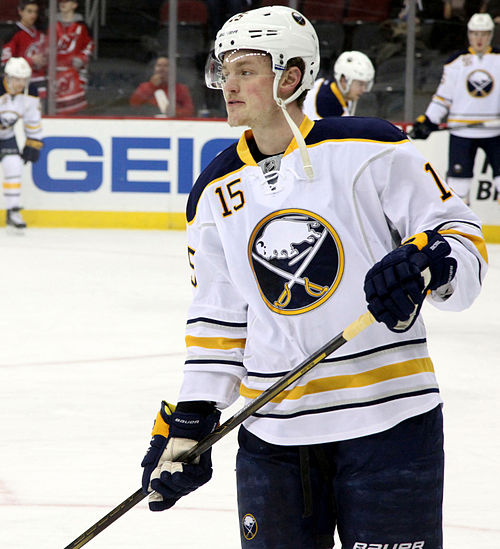
“The Tank” was an interesting time in Sabres fandom. There was a large section of the fanbase that was all-in on the plan. The core of the argument was logical: it was the easiest way to obtain elite, cost-controlled and team-controlled talent, especially when you’re not from a premier destination for NHL players. The New York Rangers, Boston Bruins, Toronto Maple Leafs, Chicago Blackhawks and Los Angeles Kings could attract free agents because of the aura of playing in a major city. The Pittsburgh Penguins, Kings, and Blackhawks were attractive destinations at that time because of they were winning. The Florida teams (the Panthers and the Tampa Bay Lightning) have nice weather and favorable tax situations.
Buffalo? I personally love Buffalo. Most players that come to Buffalo find the city wonderful, too. Great food, affordable living, easy to get around, kind people, close proximity to Toronto (the most common hometown of NHLers), elite summer and autumn weather, and, for players, getting the chance to be a celebrity in town – something most NHL players won’t get in almost any other American NHL market. There’s plenty of players that end up living in Buffalo after their playing days are over because they find it ideal.
However, the sales job to bring people by choice to Western New York is not easy. The trip from the airport to the arena involves a ride down the 33, which takes you past a bunch of cement walls and poorer neighborhoods before downtown appears as the highway comes to an end. In 2015, Canalside’s canals were only in place for a year; One Canalside and the HarborCenter had just been finished and were not completely functional; and some of the attractions now there, including Explore & More, were in the process of fundraising, not construction. We all know the reputation about the weather, which only gets amplified because the Bills play in the Snow Belt during the months before Lake Erie freezes over, even though it’s not nearly as bad downtown. (For those of you not familiar with Buffalo, the stadium is located in Orchard Park, eight miles south of downtown’s north-south location and just a couple of miles inside of the line where all the major winter storms dump snow.) It’s a drinking town that has a sports problem, but not a destination city for nightlife – something that tends to attract younger people looking for a good time postgame.
The idea was that if they don’t have a choice, they’ll get to see how great it is.
The argument against tanking is a legitimate one, as well. First of all, it’s hard to say you’re going to get better by getting worse first. Secondly, there’s no guarantee that the prospects are going to pan out in the way you envision. Finally, the goal of players is always to win; intentionally instilling a losing culture can be extremely toxic.
In the Sabres case, it seems that both of these arguments were correct.
2015-16
Tim Murray decided it was time to try winning again. He began by firing coach Ted Nolan, which was logical, since they hated each other; Nolan has only coached once since, a single year with the Polish National Team, where they managed to get relegated from the world’s top tier of teams. Murray tried hiring Stanley Cup-winning coach Mike Babcock, and the team threw record-setting money at him to come and start the turnaround. However, rumor has it that Babcock’s wife wanted nothing to do with living in Buffalo, and he instead went to coach in Toronto. The team found another Stanley Cup-winning coach in Dan Bylsma to take the helm instead.
Murray tried to accelerate the rebuild by making a couple of big moves. He traded the Sabres’ 1st-round pick they had received from the Islanders in the Thomas Vanek trade in 2013, receiving promising young goalie Robin Lehner in return. They then dealt the first pick in the 2nd round of the draft along with a few young pieces to the Colorado Avalanche for forwards Ryan O’Reilly and Jamie McBain; O’Rielly was on the verge of stardom, and the Sabres immediately signed him to a seven-year, $7.5 million per year deal.
Additionally, the team ditched those dreadful jerseys, which had been deemed the “Turdburger” jersey by Buffalo News columnist Mike Harrington and embraced by the fanbase.
The draft was considered to be an all-time opportunity to grab a superstar. The prize of the draft that year was Connor McDavid, a generational prospect. The 2nd-ranked prospect, Jack Eichel, was also considered to be a superstar as well, and was even thought of by many to be the future face of American hockey.
The Sabres had the best odds for the top pick in the NHL Draft Lottery, but that chance was only 20%. The Sabres lost out to the Edmonton Oilers; Murray was incredibly angry at the results of the lottery and acted like he was ruined when speaking with the press afterwards. Sure enough, McDavid has racked up 1,216 points in 793 career games, has won the Art Ross trophy as the league’s leading scorer five times, three Hart Trophies as League MVP, and even the Conn Smythe Trophy as the Stanley Cup Playoff MVP during a run to the finals where his team lost. His 1.53 points-per-game career average is the 3rd-highest in league history, trailing only icons Wayne Gretzky and Mario Lemieux. Eichel turned out to be wonderful, as well, as he has averaged over a point-per-game over almost 700 career games and made the All-Star game four times.
Eichel was the draft pick; the fans embraced him, despite Murray’s hissy fit. Eichel expressed excitement of the chance to be the savior of the franchise, as well; there is an infamous video of him at a college party where he chugs a beer and yells at the camera, “I’m coming for ya, Buffalo!”
The annual Prospects Game in July drew over 17,000 people because it featured Eichel as well as Sam Reinhart, the #2 pick from the year before. The rest of the draft picks made by the team produced nothing for the franchise, but ultimately, no one cared at that time, because Eichel was what everyone was excited about.
The season was a major step forward from the tank. O’Reilly led the team in points that season and made his first All-Star game; Eichel made the All-Rookie Team; Reinhart stuck in the NHL for the whole season and flashed promise; and the Sabres improved to 81 points, a 50% increase from the previous season. It was not a completely ideal season, as Lehner suffered a nagging ankle injury that limited him to 21 games. In his place, goalie prospect Linus Ullmark played 20 games and had a respectable .913 save percentage and 2.60 goals against average. They finished 12 points out of a playoff spot, largely because of a lack of talent in their bottom 6 forwards. However, and most importantly, fans were hopeful, and hope is a successful strategy at selling tickets.
2016-17
I have to admit, this may have been the least memorable season for me of the last 15. A lot of it had to do with me being in my final year of getting my master’s degree in social work, but it also had to do with the team’s play overall.
The offseason was pretty interesting. The Sabres hosted the NHL Draft in June; there was a cool draft event at Canalside, and the family and I went. We got free caricatures done, waiting 45 minutes to sit for the chance to be drawn; they hang in our kitchen to this day. The Sabres had the seventh pick, and selected Alex Nylander, whose father played in the league for 15 years, and whose brother William was on the way to becoming a superstar with the Toronto Maple Leafs. They had a stage set up at Canalside, and they brought him out after being drafted, as well as having captain Brian Gionta come out and talk to the fans. My wife, a big fan of Gionta (she thought he was very cute), recognized that he was actually on the shorter side (5’7”), but it didn’t deter her from finding him attractive. The Sabres’ other notable draft pick that year was 6th-round pick Brandon Hagel, a forward who eventually became a key contributor in the league. (I intentionally worded it that way.)
The Sabres got back into the thick of free agency, with the idea of upgrading the team’s talent. Once again, they swung for the fences. They pursued the prize of the free-agent class, Tampa Bay Lightning forward Steven Stamkos, who had led the league in goals twice and was second in another three seasons during his first eight years in the league; he met with the Sabres among other teams before deciding to re-sign with the Lightning for eight years and $68 million (They actually got to sit with him, unlike the Maple Leafs, which is notable because he is from Markham, Ontario, just outside of Toronto.) The Sabres settled for the second-best free agent available, forward Kyle Okposo, who signed with them for seven years and $42 million. Though they again failed to hit the jackpot, they ended up better off than they were the year before once the dust settled.
The Sabres demonstrated to the NHL that they were as good as anyone at mismanaging assets. Murra decided to throw a 3rd-round pick to Nashville for the negotiating rights to forward Jimmy Vesey. Vesey had just finished a four-year college career at Boston College, and was named the Hobey Baker Award winner in 2016 as the NCAA’s most outstanding player of the season. (The winner in 2015? Eichel.) Vesey had made it clear to Nashville he was going to test the waters of free agency, which he became eligible for in mid-August. Most reports stated that he wanted to sign with either his hometown Bruins or elsewhere in the Northeast Corridor; Murray ignored that, and traded for his rights in June. Vesey entertained the Sabres, but kept his promise and went to free agency. He landed with the Rangers.
The only thing I found in my social media history of note from the season was Jack Eichel getting into it with Maple Leafs fans at Key Bank Center on March 27th. The Sabres season-ticket holders had developed a habit over the years of selling their seats for select home games to opposing fans, particularly the Maple Leafs games, which usually paid off a big chunk of their ticket package for the entire year. This game was no exception, and Leafs fans were very notable in the crowd cheering for their team. Eichel fed off of that energy. He had two goals and an assist, and after his second goal, which gave them a 5-2 lead (they won by the same score), he celebrated the right way:
Seeing it back now, it was a great moment.
The most worrisome moment of the season involved Okposo. He made his one and only All-Star Game that season. He took what he felt was a routine check in practice one day in March and thought nothing of it. However, he started going through personality changes in the following days, stopped sleeping altogether, lost a bunch of weight, and was having sensory issues. He quickly ended up in the neurosurgical ICU at Buffalo General, and there was legitimate concern he may never return to a baseline. The Sabres released a cryptic statement for the purposes of protecting his privacy, which led to hundreds of players in the league reaching out to Okposo to check in on him. He eventually recovered, but it was just one of a number of concussions he suffered in his career, occurring both before and after this event. That summer, he was finally well enough to detail his ordeal, but the effects changed his career trajectory.
The season was a slight step backwards. They dropped to 78 points, finishing last in the division and 17 points out of the playoffs. Bylsma and Murray both met with Pegula on April 20th; they both were fired by Pegula at the conclusion of the meeting for failing to progress that year.
2017-18
This is when the fans started to turn on the team.
The Sabres decided to turn to a couple of former Sabres to change their fortunes – Jason Botterill, the associate general manager of the Pittsburgh Penguins, was hired in early May; unfortunately, they had to wait six weeks for him to finish up his work with Pittsburgh, as they ended making a run to win their second consecutive Stanley Cup. Botterill hired Hall of Fame defenseman Phil Housley as the new head coach; Housley started his playing career in Buffalo, and still remains the team’s all-time leader in scoring by defensemen, even though he left Buffalo in 1990. Both were considered rising stars in their respective fields; however, both were also working in those leadership roles for the first time.
The Sabres’ major move of the offseason was pushing all of their chips to the center of the table with Jack Eichel, signing him to an eight-year, $80 million extension. They also named him the team’s captain. The Sabres traded away a 6th-round pick to the expansion Vegas Golden Knights so the Knights wouldn’t pick Linus Ullmark in the expansion draft. Instead, the Knights took Carrier. They drafted three legitimate NHLers – center Casey Mittelstadt, the 8th pick in the draft; 2nd-round goaltender Ukko-Pekka Luukkonen, who we’ll refer to as UPL going forward; and 4th-round defenseman Jacob Bryson.
The season, once again, went nowhere. The biggest things that happened were burning bridges with Matt Moulson and Evander Kane finally wearing out his welcome.
Moulson’s production had tailed off over the first three years of his five-year contract, in part because Bylsma was not a fan and buried him in the lineup. However, he had served an important role with the team – he took Eichel under his wing as a rookie. Eichel actually lived with Moulson and his family during his rookie season as he learned the ropes of living on his own. The team still held Moulson in high regard as a leader, even though his skills were somewhat diminished.
Botterill and Housley were not beholden to Moulson; Housley quickly marginalized his role on the team, and Botterill decided to bury him in the minors in December – but not in Rochester, where they were unwilling to provide him with a roster spot; instead, he was sent cross-country to the Ontario Reign, the Kings’ AHL affiliate. That was the end of the relationship between Moulson and the Sabres.
Kane was a player I really liked on the ice. He was a power forward – he could score several different ways; he was willing to mix it up, and he consistently played hard. On the other hand, he had a ton of off-ice issues. He was suspended for missing practice a couple of times, including one incident where he was out partying in Toronto the night of the NBA All-Star Game there and overslept for the next day’s practice in Buffalo. He got into a bar fight and was charged, eventually ending up receiving an ACD. He was also accused of sexual assault, but the allegations were eventually dropped.
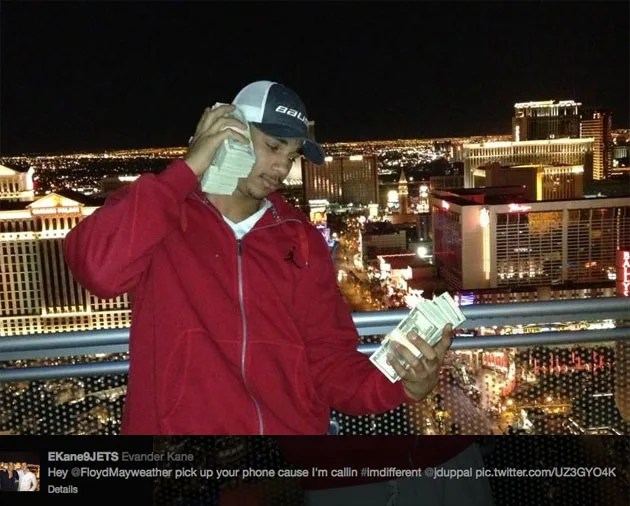
Kane was approaching the end of his contract, and would be hitting unrestricted free agency in the summer. Botterill and Housley had no interest in bringing him back. The Sabres somehow flipped him to San Jose for a conditional 1st-round pick in 2019, a conditional 4th-rounder in 2020, and Danny O’Regan, who had played on a line with Eichel and fellow Sabre Evan Rodrigues at Boston University. O’Regan managed to play the final three of his 25 career NHL games in Buffalo and did not score a point for the Sabres. Meanwhile, since his departure, Kane has created a uniquely impressive resume that covers a wide range of interests. (There are a couple really positive ones in there.)
- He re-signed with the Sharks for seven years and $49 million before hitting free agency that offseason.
- He got sued by The Cosmopolitan Casino in Las Vegas in 2019 for walking out after accumulating $500,000 in debt one night.
- He led the NHL in penalty minutes twice, 2018-19 and 2019-20.
- He was suspended for the first three games of the 2019-20 season for swiping an official with his stick, then shoving the same official for good measure, during a preseason game.
- He co-founded the Hockey Diversity Alliance in the 2020 offseason to address intolerance and racism in hockey.
- He filed for bankruptcy in California on January 11, 2021, stating that he was $26.8 million in debt.
- He was named the “Sharks Player of the Year” in 2021. (This becomes funny very quickly.)
- He was accused in July 2021 by his estranged wife Anna of intentionally throwing his own games to get him out of debt with bookies. The NHL investigated and found no evidence to corroborate the claims.
- He and his ex-wife filed competing stay-away orders of protection against one another later that summer over domestic violence allegations. The NHL investigated this as well and found no evidence to move forward.
- He was suspended for the first 21 games of the 2021-22 season for providing a fake COVID vaccination card. They attempted to terminate Kane’s contract, but had no legal standing to do so. When the suspension was over, he was sent to the minors by the Sharks. The team reported he had been vaccinated during his suspension. However, he tested positive for COVID shortly after his return. The expectation was that he would isolate; instead, he went to his hometown of Vancouver during that time. At this point, the Sharks were allowed to terminate his contract on January 8, 2022.
- He played well enough in a short stint with the Edmonton Oilers later that season to get a four-year, $20.5 million contract from them in the summer of 2022.
- He had abdominal surgery in September 2024 because he had been dealing with two torn lower abdominal muscles, as well as two adductor muscles and two hernias.
- In December 2024, his ex-wife Anna was exposed as a Jane Doe that had filed a lawsuit against Diddy for bringing her to New York City in 2003 as a 17-year-old; he then allegedly plied her with drugs and alcohol, causing her to fall unconscious, and allowing Diddy to do what he was accused of by many others. That case was dismissed as well.
- He had yet to play in the 2024-25 regular season when he underwent another surgery on January 9, 2025 to address an ongoing knee issue. He missed the rest of the regular season as a result.
- As part of the recovery process, Kane, a Canadian citizen playing for a Canadian team, attended the presidential inauguration in Washington, D.C. on January 20, 2025.
- He decided against joining the traditional handshake line between the teams at the end of the 2025 Stanley Cup Finals, a blatant violation of the unwritten rules of the sport, and, for that matter, sportsmanship as well.
Despite all this, teams will tolerate the insanity he brings along; he played his 1,000th game on March 31, 2026, and has 339 career goals.
The most notable game was the Winter Classic, where the Sabres played the New York Rangers at Citi Field in Queens; the Sabres had to be the home team because of the Rangers’ contractual obligations to Madison Square Garden. The Sabres lost 3-2 in the shootout. Yeah, whatever.
The Bills became a major problem for the attitude towards the Sabres in town. They had their own 17-year playoff drought going at the start of the season. People loved the Bills in town regardless, mostly because the atmosphere surrounding the home games and tailgate had become wild. The Bills were not overly talented that year; however, new coach Sean McDermott scraped out a 9-7 record, and after the Ravens stumbled in their season finale, the Bills went to the playoffs. They would miss the playoffs again in 2018; they’ve made it all seven years since. Suddenly, people remembered how much fun winning could be.
Things got heavy again towards the end of the season. Robin Lehner left a game in late March after having a panic attack while in the net; he needed to address his mental health immediately at that point. He went to rehab for an alcohol use disorder and worked with mental health professionals to get a proper diagnosis of bipolar disorder; the Sabres did not make a qualifying offer to him at the season’s conclusion, allowing him to leave as a free agent.
The season ended with the Sabres getting 62 points, which was not much better than the tank years, and was the worst record in the league by five points. O’Rielly announced in his end-of-season media availability that he had begun to lose his love of the game, which was a thinly-veiled request to get out of Buffalo.
2018-19
The Sabres, due to having the worst record in the league for the third time in six years, had the best odds in the Draft Lottery. The Sabres won this time. The top prospect was Swedish defenseman Rasmus Dahlin, who was considered the best defensive prospect at draft time in four decades. The Sabres got him with that first pick, and added Mattias Samuelsson with the first pick of the 2nd round.
O’Rielly headed out of town on July 1st, hours before a $7.5 million signing bonus was due to kick in; he went to St. Louis in exchange for two draft picks, Patrik Berglund, Vladimir Sobotka, and Tage Thompson, the Blues’ fourth-rated prospect – a lot of pieces, but nowhere near a player that could be seen as being as valuable as O’Rielly. The timing of the deal was notable, as rumor had it that Pegula made it clear he wanted O’Rielly traded before he was on the hook for that bonus. It was understandable, as that amount of money is not insignificant, but it was also the first inkling that Pegula was becoming less interested in spending big money on the team, especially since season-ticket sales were starting to drop off.
The Sabres’ made a couple of other trades in the offseason to add some skill. The Sabres traded with the Pittsburgh Penguins for two players, most notably forward Conor Sheary; the Sabres only had to give up a conditional later-round pick because the Penguins were mostly looking to unload salary. In August, the Sabres traded for Jeff Skinner of the Carolina Hurricanes; he had scored 30 goals in three of his first eight NHL seasons, and in September 2013, presented a 23-year-old Taylor Swift with his signed jersey, even though she had no clue of who he was.
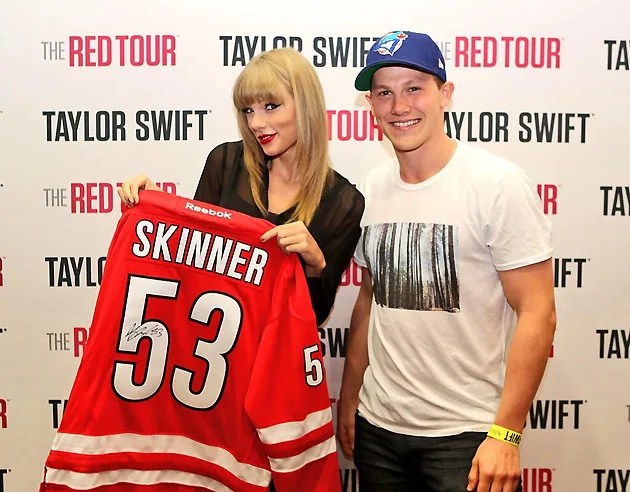
(A year later, 1989 dropped, and she’s been the biggest musician on the planet since.)
Meanwhile, they decided to pass on a few of the draft picks from the Murray era that had yet to sign entry-level contracts with the team. That included Hagel. He eventually signed with the Chicago Blackhawks, spent a few years developing… and in the past four seasons, has been an absolute star for the Lightning. He was named as a 2nd-Team All-NHL Player for the 2024-25 season and finished tied for 11th in the league in scoring; this year, he missed 11 games, but still managed to finish in the Top 40 in scoring, and tied with Sidney Crosby for points on the season.
The Sabres came out looking like a different team in 2018. They got hot early, and had a 10-game winning streak in November; after that 10th win on November 27th, they had the league’s best record. Skinner had 20 goals in the first 27 games of the season, Eichel was averaging over a point a game, and Reinhart started to approach the territory of being a legitimate star. Dahlin was in on the act, as well, becoming only the fifth defenseman in NHL history to record 30 career points before his 19th birthday.
Unfortunately, the underlying numbers for the Sabres were poor, and eventually, things evened out. The 10 consecutive wins featured four wins in overtime and another three in the shootout. They were scoring at a much higher shooting percentage than the league average. Things eventually came back to earth. By early January, they were barely in the conference’s top 8.
The return on the O’Rielly deal looked pretty poor. Berglund had a limited no-trade clause in his contract; however, his agent failed to get his list into the Blues in a timely fashion. This allowed him to get dealt to Buffalo. He hated it. He played 23 games, and on December 15th, decided he would rather never play in the NHL again than to play in Buffalo any longer. He contributed two goals and two assists in those 23 games. Sobotka put up 13 points in 69 games, and Thompson had 12 points in 65 games.
The Sabres tried to stay on the fringes of a playoff berth by trading for defenseman Brendan Montour from Anaheim for a 1st-round pick and defenseman Brendan Guhle. At that time, Montour had been leading the Ducks with 25 points in 62 games. Montour had an uptick after arriving in Buffalo, with three goals and 10 points in 20 games; however, the Sabres put up an ugly March, going 2-12-1. The Sabres finished with 76 points. That would be the end for Housley, as Pegula fired his fifth coach during his eight years of ownership.
Oh yeah, O’Rielly… he enjoyed a career year, but the Blues went into 2019 with the league’s worst record. They fired their coach; they then went on a tear in response, finding their way to the playoffs and winning the Stanley Cup, with O’Rielly winning the Conn Smythe Trophy as Playoff MVP.
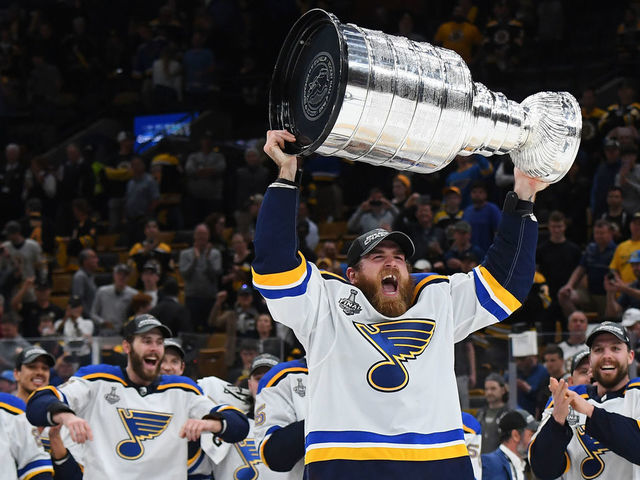
It was also reported the O’Reilly found his love for the game again.
2019-20
Botterill was under pressure at this time to hit on his next coaching hire, because he knew that if it didn’t work, he would be looking for work, too. He decided to think way outside of the box; he hired Ralph Krueger, who had coached Edmonton during the strike-shortened 2013 season, then went to England and chaired the Southampton F.C. in the English Premier League (a soccer team, for those who don’t know) for the next five years. The media vacillated between admiring his wide and varied background in various interests and bewilderment over deciding on a guy that had spent the last five years in another sport altogether.
It really didn’t matter who coached the Sabres at this point; things were headed nowhere. Free agents had no interest in coming to Buffalo, not because of the city, but simply because they wanted to win. Still, they re-signed Jeff Skinner to an eight-year, $72 million deal off of his 40-goal season, which was a massive overpayment, likely done to keep him and Eichel (among others) content. He was considered very talented, but immediately the contract was deemed one of the league’s worst.
The Sabres decided they’d try again with Jimmy Vesey; they traded for him from the Rangers, and this time he couldn’t escape because he was under contract.
Let’s be positive to start:
- The Sabres drafted Dylan Cozens in the 1st round of the draft, and he ended up being a solid NHLer pretty quickly.
- Victor Olafsson made the opening-night roster and scored 20 goals that season, despite missing six weeks with a lower-body injury.
- The Sabres started 9-2-2, and Krueger was looking like a masterful hire.
- Eichel had his best year so far, scoring 78 points in 68 games, putting him 10th in the league in points for the season.
- Ullmark won 17 of his 34 starts, putting up a 2.69 GAA and a .915 save percentage, which was 19th-best in the league.
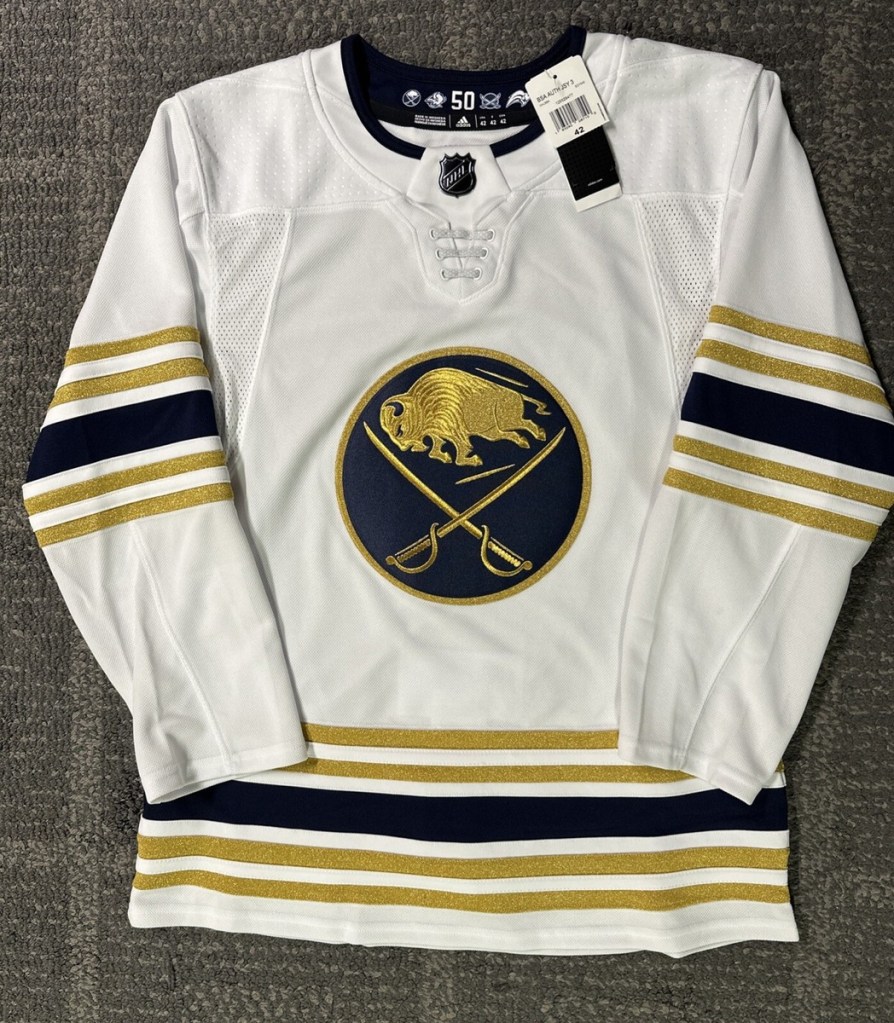
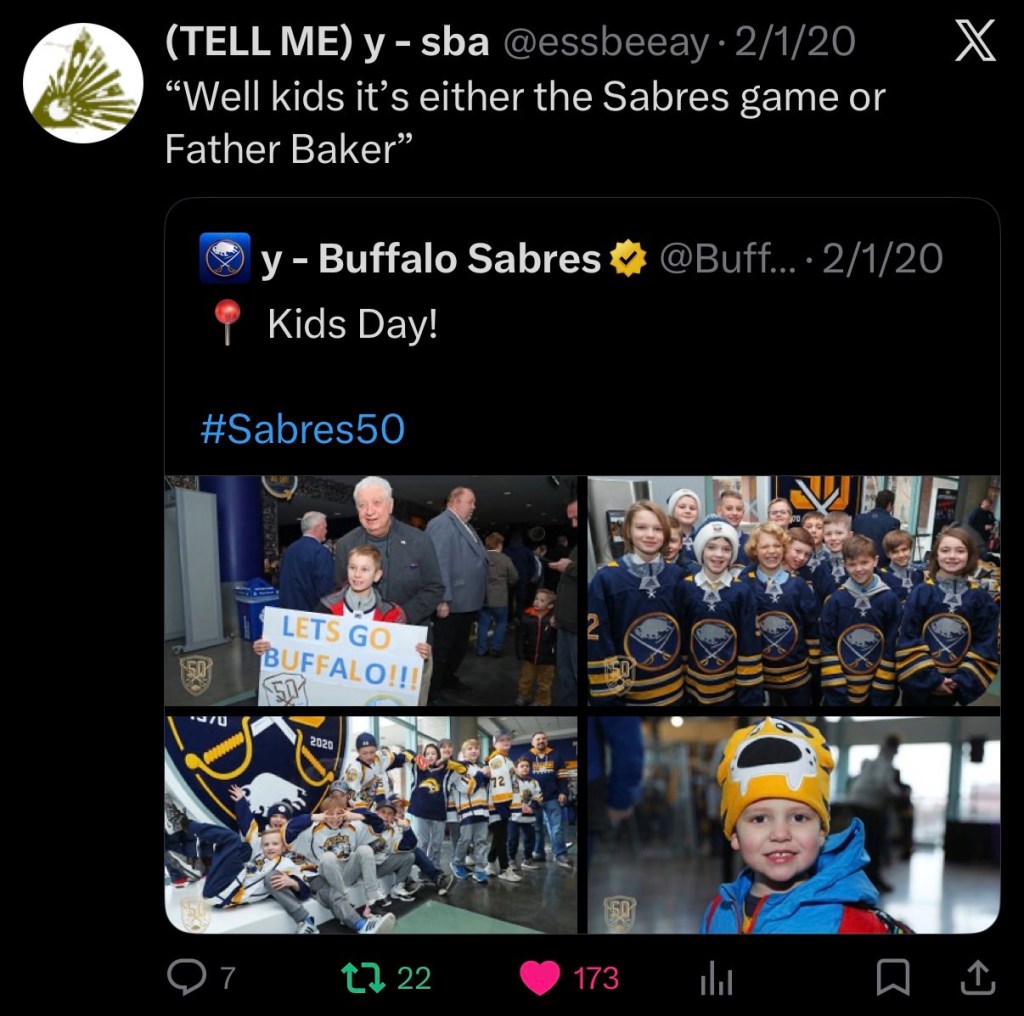
- The Sabres put on a decent celebration focusing on their 50th year of existence, including a white jersey with a shiny gold buffalo and crossing swords.
Also, there was this post.
The bad:
- In spite of the hot start, the underlying numbers were bad again, and the Sabres had a 3-8-3 November.
- Krueger started to rip on Skinner in the media and repeatedly made him a healthy scratch. The Sabres got 14 goals from Skinner for their $9 million.
- Better yet, make that 23 goals for $15 million, as Kyle Okposo reached a career-low with 19 points. Fans were begging the team to buy out the remainder of his contract. That wasn’t about to happen.
- They drafted highly regarded goalie prospect Erik Portillo with their 3rd-round pick. He decided quickly he wanted nothing of the organization, and stayed in college until the Sabres traded his rights to the Kings.
The Sabres were six points out of 3rd place in the division (and at that moment a playoff berth) on the day of the trade deadline. Botterill must have decided that he had to take a shot in the dark at things, so he made a couple of moves on deadline day of February 24th – he traded Evan Rodrigues (who had requested a trade) and Conor Sheary (55 games, 19 points) to Pittsburgh for Domink Kahun, a promising young center, a position the team was severely lacking at. They also dealt a 5th-round pick for veteran Wayne Simmonds. The Sabres responded by losing their next six games, before finding their way to a shootout win over Washington. At this point, they were now 11 points outside of the Top 8 in the conference.
The Sabres were due to play the Montreal Canadiens on March 12th in a game that could have determined which team made the playoffs. At that time, Montreal was three points ahead of the Sabres in the standings and had a .500 points percentage, just ahead of the Sabres .493 points percentage.
The game was canceled. North America locked down that night due to COVID-19 transmission becoming an international concern.
The league eventually finished the season in August by compiling the standings as they were left that day and letting the 12 best teams in each conference by points percentage. Montreal was 12th; the Sabres were 13th. Even in an expanded playoff field, the Sabres missed out, and in the process, tied the Hurricanes with an NHL-record nine-season playoff drought.
2020-21
The offseason didn’t start until October due to the readjustment of the previous season’s timeline created by the pandemic. For Western New York’s sake, they could have just canceled the whole season, and it would have been fine.
The Sabres had fired Botterill in June, which was technically the offseason, even though the league was completely shut down at that time and no one was sure of how the playoffs would be structured at that time. They replaced him with Kevyn Adams, whose most significant post-playing experience was running the HarborCenter across the street from the arena, being a business executive with the Sabres, and being an assistant on Ron Rolston’s staff. Most importantly, Pegula liked him, and he was already on the payroll.
The Pegulas were starting to see attendance drop every year. The season ticket base had gone from a five-figure waitlist after the President’s Trophy season of 2007 to people now being able to buy season tickets as soon as they became interested. The Bills had appeared to become the Pegulas’ priority, and for good reason – owners could be clueless and still find a way to make $100 million in profit per year from an NFL franchise. Meanwhile, the Sabres were supposedly losing eight figures every year.
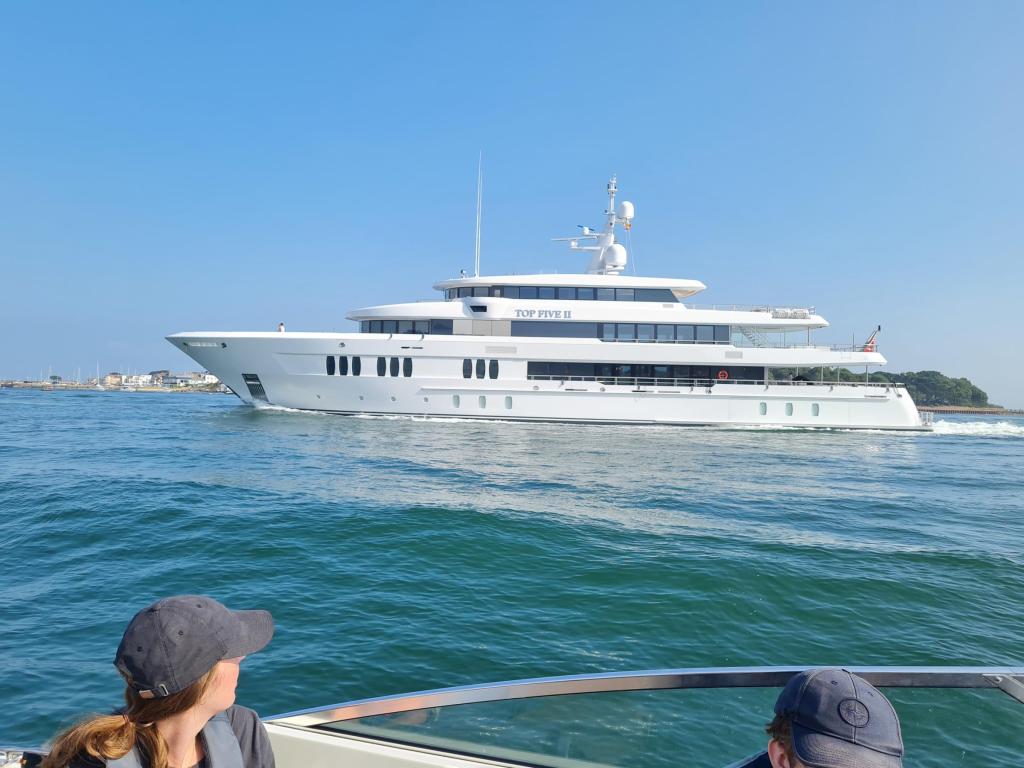
The Pegulas had started cutting executives from the non-Bills payroll during the early months of 2019, and in January 2020, with the Sabres again lost in the woods, the family held a videoconference with the staff employed by Pegula Sports & Entertainment (PSE), the overarching managing arm of the teams. Kim informed staff that there was going to be significantly reduced budgets and no raises, which would be understandable in some circumstances; however, Kim added that part of the austerity measures were to maintain the family’s lifestyle, which at that time included building a superyacht that ran the family somewhere in the range of $75-100 million. The Pegulas were seen as tone-deaf; add in a lot of anonymous complaints of a “toxic culture” in the organization, plus the team never making the playoffs in a full year of the family’s ownership, and the public perception of the Pegulas turned south.
As if the budget had not already been made an issue, the NHL played to mostly empty arenas all year. The NHL is much more heavily reliant on ticket revenues than the other major North American sports leagues, bringing in 44% of all revenue from the gate receipts. The NHL held the cap flat as part of a new collective bargaining agreement, with the deal being that the players would hold off on a bump in the salary cap until the owners could make up the deficits created by the minimal revenues of that season.
(Funny to remember how it was during the high-alert points of the COVID-19 pandemic, looking back at it and comparing it to how we live now.)
The draft occurred on October 7th and 8th. The Sabres only had five picks, but made two excellent picks in the first two rounds – offensively-gifted forwards Jack Quinn and JJ Peterka.
The Sabres also went back to royal blue, their original color. Western New Yorkers rejoiced.
The league set up a ton of protocols to manage the COVID rules, including having teams play only within their division; on top of that, the divisions were temporarily reconfigured, in part to keep the Canadian teams separate to avoid cross-border travel. The reconfiguration left the Sabres playing with six Metropolitan Division teams along with the Bruins. The schedule was shrunk to 56 games due to the late and truncated offseason; the season began on January 13th. Additionally, the teams would often play two games in a row at one team’s arena to minimize travel and opportunities for exposure.
The Sabres surprisingly tried to add talent to the current roster again, despite the financial crunch created by the pandemic and the yacht. They signed the offseason’s premier free agent, former MVP Taylor Hall, to a one-year, $8 million deal, complete with a no-trade clause. Eric Staal, a 6-time all-star, 1,000 point scorer, and Stanley Cup champion alongside Adams on the 2006 Carolina Hurricanes, was traded to Buffalo, as well; though in the twilight of his career, the team was hopeful he could provide stability as a middle-six forward.
Unfortunately, the Sabres still had a massive hole in the construction of the squad – coaching. Krueger made a convincing case for having a trophy named after him to annually recognize the worst coach in the NHL – the opposite of the Jack Adams Award, if you will.
The COVID protocols failed the Sabres first. They hosted the New Jersey Devils on the dates of January 30th and 31st; the Sabres won the opening game 4-3 in the shootout, thanks to Jack Eichel being the only one to beat the goalie for either team in the challenge. For the Sabres, Olafsson, Staal, and Tobias Rieder scored, while Taylor Hall chipped in two assists against his former team. The Devils got goals from Ty Smith, Andreas Johnsson, and Janne Kuokkanen, while forward Kyle Palmieri by giving the Devils 18:23 of ice time and COVID.
Yep. The Devils had Palmieri play while clearly symptomatic. The Devils had four players end up on the COVID-19 protocol-related absences list just before going into Buffalo; Palmieri was placed on that list on the day after the game. Four other Devils that played in both games entered the protocol the next day. The Sabres saw it immediately spread through the team as well. Hall and Ristolainen went into the protocols on February 2nd, and the league postponed all Sabres games for the next week. Rieder, Montour, defenseman Jake McCabe, Cozens, forward Curtis Lazar, Mittlestadt, and Dahlin all joined the list within the next two days, and Krueger also tested positive; the team eventually shut the Sabres down until February 15th, when they were finally healthy enough to have a full compliment of players on the ice.
It was a head-scratching start that shifted into a record-setting year. They blew past the franchise record 14-game losing streak by putting together an 18-game streak, tying the NHL record set in 2004 by the Pittsburgh Penguins, who were probably tanking that season – the two 1st-round picks for the Penguins after that season were Evgeny Malkin (#2, 2004) and Sidney Crosby (#1, 2005), which has left them in good shape through this day. Krueger was finally fired on March 17th, 12 losses into the streak; new head coach Don Granato, an assistant under Krueger and yet another first-time head coach, lost his first six before getting a 6-1 win over Philadelphia on March 31st. At the end of the losing streak, the Sabres were 6-23-5, 11 points worse than anyone else in the league, and guaranteed of setting that playoff drought record.
Knowing all we know now, most of the players were checked out from the beginning. The no-trade-list issue that we first saw with Berglund in 2018 showed up in a different fashion with Staal. Staal liked playing in Minnesota, but knew they were rebuilding; he had used his 10-team no-trade-list to help steer him to a contender of his liking, and threatened the Wild that he would retire if he got dealt somewhere he did not want to go. He did not view the Sabres as a contender, and therefore never had them on the list. He probably only chose to report to Buffalo as a favor to Adams, with the idea that he could be moved again if the team could not contend that year.
It’s questionable if he ever mentally reported to Buffalo. 32 games, three goals, seven assists. He was moved before the deadline to Montreal for a 3rd-rounder and a 5th-rounder.
The Hall deal ended up looking like a quick one by the player, as well. Hall had two goals and 19 points in 37 games, appearing disinterested in playing the whole way through. The no-trade clause may have seemed odd for a one-year contract, but Hall knew what he was doing; he could both steer where he wanted to go and name the return the Sabres got in return. He decided he wanted to go to Boston, and was not going to play anywhere else; the Sabres were forced to give him and Lazar up and got Anders Bjork and a 2nd-round pick back from the Bruins. Bjork provided the Sabres with 14 points and 14 penalty minutes over 74 games in three seasons before being sent to the Amerks permanently in November 2022 and eventually traded for “future considerations” (aka nothing) to the Blackhawks in March 2023.
There were a couple of bright spots on the team; Reinhart had a breakout offensive season, scoring 25 goals, which was 11th best in the league. Ullmark had another solid year, ranking 12th in the league with a .917 save percentage along with a respectable 2.63 GAA. Mittlestadt and Cozens looked like they were getting comfortable with playing in the NHL, although the numbers weren’t there yet.
Most of the team, though, appeared to have quit at some point, which arguably may have been in a previous season.
- Skinner spent the first half of the season still being treated like a pariah by Krueger, and didn’t find a rhythm for the entire season; he finished with seven goals and seven assists in 53 games.
- Okposo kept slipping further; he had two goals and 11 assists in 35 games.
- Dahlin had an off-year, scoring 23 points in 56 games, down from 40 points in 59 games during 2019-20.
- Montour, in his final year before free agency, had five goals and nine assists in 38 games before being dealt at the deadline to Florida for a 3rd-round pick. Montour rediscovered his game in Florida in a big way. He had 147 points in 228 games there; he was the offensive defenseman that helped lead them to the Stanley Cup Finals in 2023 and 2024, with them winning the whole thing the second time. He got $49.98 million from the Seattle Kraken in the summer of 2024.
- Ristolainen did this, another awful-but-classic moment from the drought.
The most concerning part was Eichel’s season. He had an injury-filled, subpar campaign, with two goals and 16 assists in 21 games. His season was cut short because of a herniated cervical disc in his neck suffered against the Islanders during the losing streak. The Sabres announced he would miss the rest of the season because he needed surgery.
About that surgery…
 The Power Blog
Leave a reply to The Drought, Part 1: 2011-2015 – The Power Blog Cancel reply