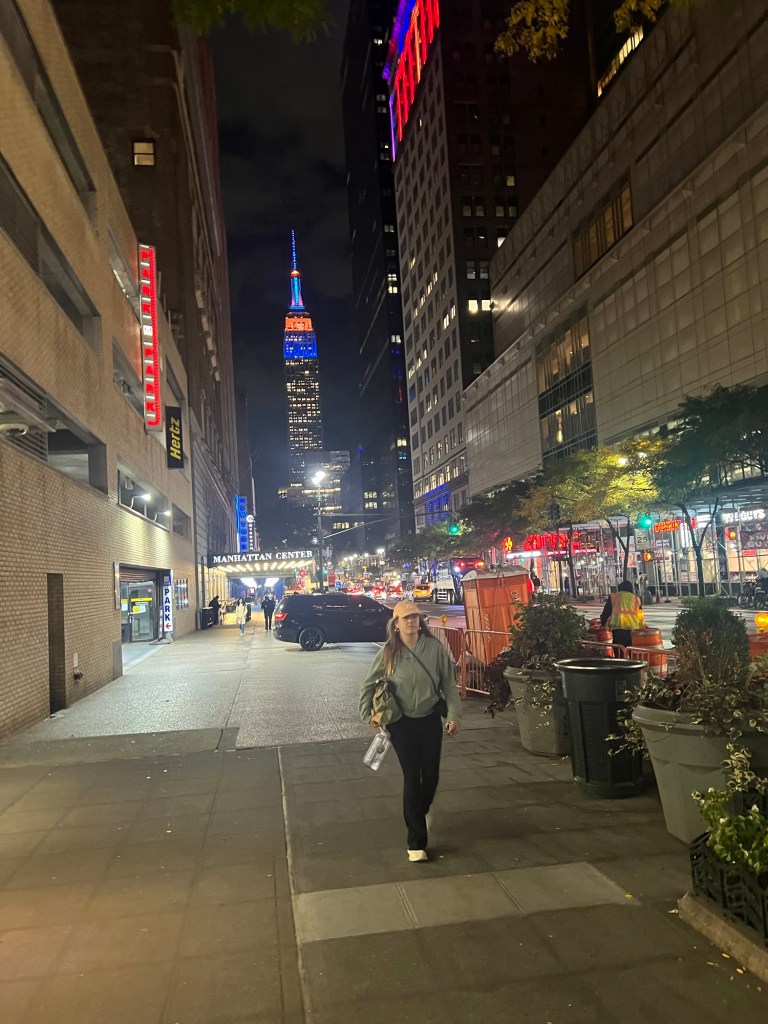
(Below is a photo I took on the way back to our hotel after Kim and I went to a concert in Forest Hills in Queens on October 25, 2024; it was opening night for the New York Knicks; they stomped the Indiana Pacers 123-98 earlier that night. Too bad the season ended the opposite way. For the unaware, that’s the Empire State Building lit up in blue and orange directly down the block; Madison Square Garden is a block away from here.)
I really began to pay attention to professional sports around 1983. At that point, I was about to turn seven, and all the boys that I hung out with loved being active, so we played a lot of different sports. Of course, you pick your teams at that point, and if you’re serious about it, that tends to be your team forever. Like most Western New Yorkers, I am a Bills and Sabres fan. My extended family is a bunch of Yankee fans, so I fell into fandom with them.
There was no natural choice for being a pro basketball fan in Olean during the 1980s. There were no NBA teams with most of their games on local television at that time. The Cleveland Cavaliers may be the closest team in terms of distance, but Cleveland did not feel close. The Toronto Raptors didn’t come into existence until 1995. My mom was a fan of the Boston Celtics, mainly because of our Irish ancestry. (Similarly, she generally cheers for Catholic universities in college basketball for reasons of faith.) I didn’t subscribe to that – I felt no connection to Boston. I did feel that with New York – I had been there as a four-year-old and loved the experience; also, the state and city having the same name worked for me – so I decided my team was the Knicks.
Since then, I have always been a huge fan of the Knicks. For example, this is one of my senior pictures. Notice the orange and blue highlights on the hoodie; if you look closely, you can also see part of the Knicks logo and the sweatshirt in the bottom right corner of the picture.

I managed to convert some others into being Knick fans over the years. My dear friend Matt was originally a fan of the “Bad Boy”-era Detroit Pistons; one year , when the Knicks and Pistons faced off in the playoffs (1992; I had to look at Basketball Reference to get it right), he sent me three Orlando Woolridge basketball cards in the mail because he knew Woolridge drove me up the wall during that series. (For reference, Matt’s house and mine were less than 500 feet apart.) Eventually, I convinced him the Knicks were the squad to watch. My brother Patrick had no choice; I battered him into being a fan. Interestingly, it turns out my dad was a fan all along, too – after all, he is a native New Yorker – but he never made a thing of it to me, despite dealing with my rabid fandom.
The 1983-84 season, the first one I really paid attention to, was an interesting one for the Knicks. Their star was Bernard King, a small forward in the middle of his prime; he averaged 26.3 points per game that year. In comparison, the team’s second-leading scorer was Bill Cartwright at 17.0 per game; he was a decent center at that time. He would eventually get traded to the Chicago Bulls for Charles Oakley, and late in his career, would be the Bulls’ starting center during their first three championship runs.
King, though, was the team, and he was dominant. He finished second in the MVP voting, behind Larry Bird, who won the first of his three straight MVP awards that year. To add perspective, the three guys that finished 3-4-5 in the voting were Magic Johnson, Kareem-Abdul Jabbar, and Isiah Thomas, three legends of the game. The Knicks finished fifth in the conference, beat the Isiah-led Detroit Pistons in the first round, then lost in seven games to the eventual champion Boston Celtics in the next round.
The following year, it all fell apart. Cartwright missed the entire season with foot injuries. King led the league in scoring, averaging almost 33 per game, but his season ended a few weeks early trying to block a dunk in a late-season game when they still believed they were teetering on the edge of the playoff race; he broke his femur as well as tearing both his anterior cruciate ligament (ACL) and meniscus; he missed the following season and was never the same player. The Knicks lost their last 12, and finished exactly that far out of the playoffs.
That spring was the first NBA Draft Lottery, where the league tried to stop teams from intentionally playing horrible during the season to get the top draft pick (tanking) by giving all the teams that missed the playoffs an equal chance at the #1 pick. The league fixed the lottery so the Knicks could win. (I think I’m kidding.)
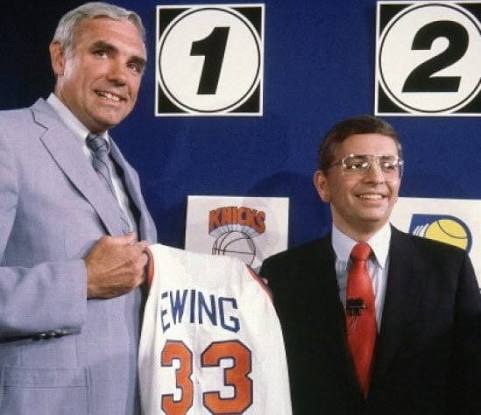
The prize pick that year was Patrick Ewing, a three-time All-American center from Georgetown that brought the Hoyas to the NCAA National Championship Game the previous two years, winning it all in 1984 and losing to Villanova in 1985. Of course, the Knicks took him at the top of the draft.
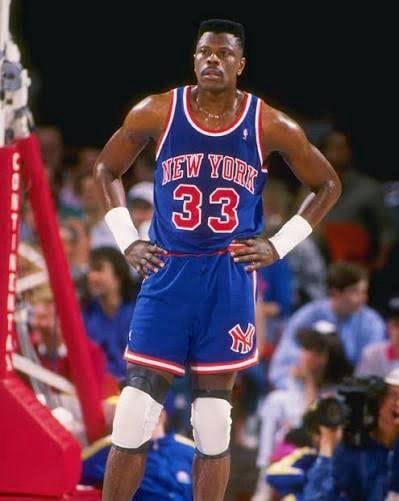
The Knicks took a while to build a team around Ewing, but by the early 90s, they were a legitimate contender. Unfortunately, that was also when Michael Jordan hit his prime and played under former Knick Phil Jackson, who may easily be the greatest coach in the history of the sport. The Bulls knocked the Knicks out of the playoffs in 1991, 1992, and 1993, with the Bulls winning the title all three years.
The Knicks had their best look at it against the Bulls in 1993, when they met in the Eastern Conference finals; they had home-court advantage after finishing with the conference’s best record. The Knicks got out to a 2-0 lead in the series, capping their Game 2 win with one of the most iconic plays in team history – “The Dunk”.
The Knicks were clinging to a 91-88 lead against the Bulls in the final minute, with Jordan on a tear to get them back into the game. John Starks, the team’s shooting guard and my favorite basketball player ever other than my son, brought the ball up and to the foul line extended. Ewing set him a screen to go left; instead, Starks went right, blew past the defender, and dunked hard with three Bulls (including Jordan) flailing at him as he elevated. Madison Square Garden went insane.
Unfortunately, the Knicks lost the next four, including Game 5 at the Garden, where small forward Charles Smith had four straight layups blocked by various Bulls in the final seconds; Smith was 6’10” and probably could have dunked, but that didn’t happen.
The Knicks ran back essentially the same team the following year; however, the complexion of the entire league changed, as Jordan retired during the offseason to play baseball after a bunch of stuff happened in his life, including the murder of his father, his major supporter.
The Knicks were a gritty team, even for that era, when defenders could get away with a lot of contact and still avoid getting called for fouls. Their coach, Pat Riley, was best known for leading the “Showtime” Los Angeles Lakers to four titles in the 1980s; those teams were supremely talented on offense, and they played a flashy brand of basketball. The Knicks were not that; Riley adjusted accordingly, and got results.
The Knicks were led by Ewing; however, two other players really defined that team. Starks was a streaky shooter that wore his emotions on his face at all times. He was listed as a 6’5” guard, but realistically, he was closer to 6’3”. The height never mattered, though; the heart did. He only played one year of Division I basketball, which was as a senior at Oklahoma State; there was a period when he was out of school and bagged groceries at a Safeway to make ends meet. He was undrafted, and went through stints in the CBA (the minor league in North America at that time) before finding his way to a tryout with the Knicks in 1990. During one practice, he tried dunking over Ewing, to which Ewing responded by throwing him down to the floor. Starks twisted his knee, and due to league rules, the team couldn’t release him while he was injured. When he got healthy, he found his way into the starting lineup; he spent eight years in New York, was voted to the league’s All-Defense 2nd team in 1993, made the All-Star Game in 1994, and won the league’s Sixth Man Award in 1997.
Oakley was the physical personification of the team. Oak was 6’9” and built like a brick. He played in Division II in college at Virginia Union, where he was National Player of the Year. His first three seasons were in Chicago, where he essentially served as Michael Jordan’s enforcer. That mentality continued in New York after his trade there in 1988. He was physically punishing, and commanded instant respect, simply because if you didn’t give it up voluntarily, he’d give you a blow that would make it clear you should have it. He retired after 19 years with 12,417 points and 12,205 rebounds; considering you get two points for a basket and rebounds tally up individually, it shows where his specialty was. (Yes, I know, threes… but he only averaged four threes a season over his career.) His teammates considered him the leader of the squad. He was 1st-team All-Defense and an All-Star in 1994.
The complimentary pieces of that squad matched the mentality. Anthony Mason, their sixth man, has such large forearms that it looked like it’d be impossible for him to shoot the ball with any arc; he nonetheless was very effective in his role. Anthony Bonner, who joined the team as a free agent the past summer, was also a burly forward that also had a physical presence. Derek Harper was the point guard acquired mid-season from the Dallas Mavericks after initial starter Doc Rivers got hurt early in the year; he was not flashy at all but was effective, especially come playoff time. His backup, Greg Anthony, was another solid player; he was the heart and soul of the UNLV teams of the 1989-1990 and 1990-1991 seasons, leading them to a National Championship in 1990. Hubert Davis and Rolando Blackman were solid offensive options off of the bench. Herb Williams was a veteran big man who could spell Ewing when needed. Also, Charles Smith. (He wasn’t a bad player; he just seemed like a bad fit on the team.)
Anyway, back to the season. They finished with the second seed in the Eastern Conference that year, tied with the Atlanta Hawks in record but losing the tiebreaker. The Knicks got the New Jersey Nets in the first round and beat them 3-1 in a best-of-five series. In the second round, the Knicks drew the Bulls again. Jordan may have been gone, but Scottie Pippen was in his prime, and finished 3rd in the MVP voting (in contrast, Ewing was 5th); BJ Armstrong and Horace Grant were All-Stars that year; Toni Kukoc joined the squad; and Phil Jackson was still coaching. It was a back-and-forth series, and it went seven games, despite the Bulls having some serious internal turmoil (in Game 3, Pippen sat out the final, game-winning play because the ball wasn’t going to him for the shot). The Knicks won Game 7 by 10.
The conference finals were against the Indiana Pacers, who came into the playoffs as the 5th seed but upset both a young Orlando Magic squad and the Hawks. The Knicks won the first two games in the Garden, the Pacers got the two in Indianapolis. It looked like the Knicks were going to take Game 5, as they led 70-58 going into the 4th Quarter; unfortunately, the legend of Reggie Miller was born that night. In the 4th Quarter, Miller hit five threes, scored 25 of the Pacers’ 39 points, and got into his famous trash-talking exchange with director / Knicks courtside superfan Spike Lee, complete with flashing the choke symbol at him repeatedly. Pacers, 93-86. Fortunately, Starks was able to respond in Game 6 in Indy with the season on the line; his 26 points and six assists led the Knicks to a 98-91 victory, and Ewing had a monster Game 7, with 24 points and 22 rebounds in a 94-90 win for the Knicks to advance to the NBA Finals against the Houston Rockets.
The hyped matchup was Ewing against Rockets center Hakeem Olajuwon, who was the league’s MVP and Defensive Player of the Year in 1993-94. Unfortunately, Olajuwon won the matchup by a significant margin. Ewing’s efforts were solid, and he got 12.4 rebounds and 4.3 blocks per game in the seven-game series, but he shot just 36% from the field and averaged 18.9 points per game, way off of his season averages of 50% and 24.5 points. In comparison, Olajuwon’s stat line 26.9 points on 50% field goal shooting, 9.1 rebounds, and 3.9 blocks. Ewing was the Knicks’ leading scorer in 15 of the 18 games leading up to the Finals; he only led the team twice in the championship series.
It was an abysmal series to watch, and not just because of the results for my squad; the pace was slow and the offense was pathetic. To break down the major points of the series:
- The Dallas Mavericks were the worst offensive team in the NBA that season; they averaged 95.1 points per game during a 13-69 season. The Rockets won Game 3 by a 93-89 score; 93 was the highest point total either team had in the Finals.
- The Rockets shot 42.6% from the field in the series. The Knicks shot 40.7%.
- Riley has expressed disappointment in retrospect for some of his decisions in the series, especially keeping Starks on the floor during his 2-for-18 Game 7. However, he also decided to roll six-and-a-half guys in his rotation; Anthony played a little over 11 minutes per game, but the starters and Mason logged 91.9% of the team’s minutes in the series. In contrast, nine Rockets averaged at least 11 minutes per game. The Knicks probably wore out.
- Harper was very effective in the finals, averaging 16.4 points and 6.0 assists; he led the team in scoring in three of the games, and was clearly the best Knick in Game 7.
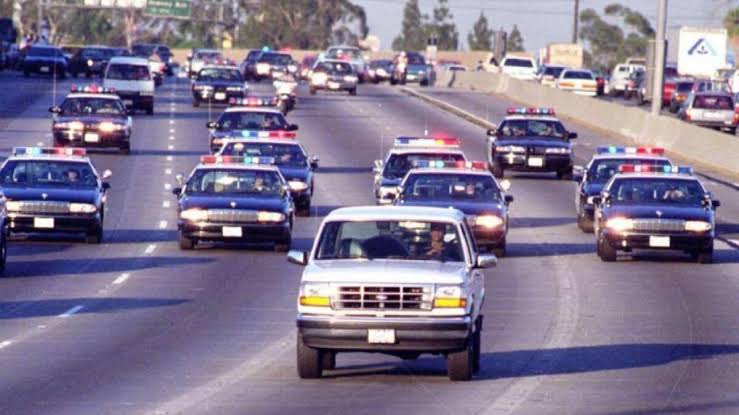
- Game 5 (a 91-84 Knicks win) was literally very hard to watch. The video was the big issue, and not just for me, alone. Everyone’s screen kept buffering with images like this:
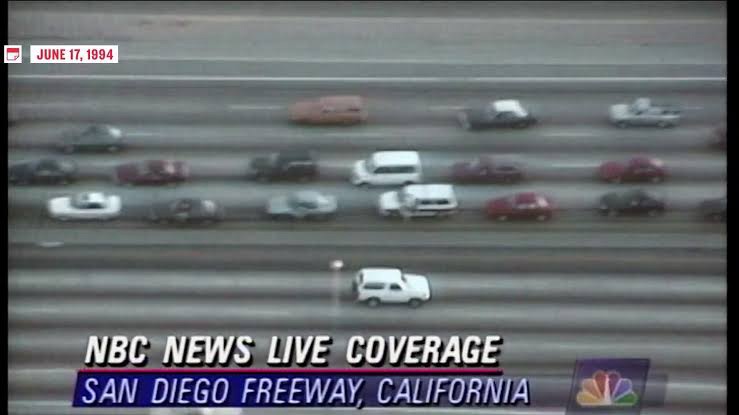
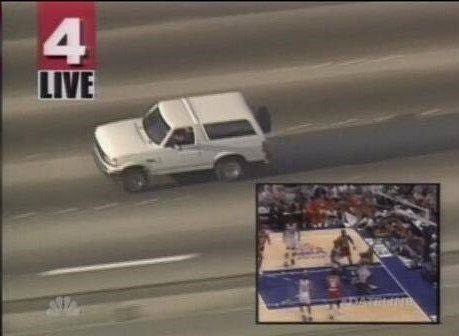
- Game 6 featured Starks at his best. He scored 27 and had eight assists, but the 4th Quarter almost made him immortal in New York. He single-handedly kept the Knicks alive, scoring 16 of the team’s 22 points in the 4th. The Knicks were down 86-84, but had the ball out of bounds in the frontcourt with 5.5 seconds left. They drew up the play for Starks. He got open for a 3, but Olajuwon frantically got back into the play and tipped the shot. Rockets win.
- Game 7 was Starks at his worst. 90-84 Rockets, and it never felt like the Knicks were in the game. The Rockets were the champs, and Olajuwon was Finals MVP.
That was the team’s final good look at it with that lineup. The next year, they were the third seed in the East with essentially the same lineup. Mason won the Sixth Man award, and Starks became the first player in NBA history to hit 200 three-pointers in a season. (The NBA has evolved a long way since then: in the 2025-26 season, 22 players hit at least 200 three-pointers, and Stephen Curry now holds the record for threes in a season with 402.) On the other hand, Oakley missed 32 games with an injury, and the team didn’t have the same energy it had the year before. In the second round, they faced the Pacers again; the Pacers were the second seed, but the Knicks had home-court advantage due to having a better record (the Pacers had the higher seed because they won their division). The series came down to the final possession of Game 7, where Ewing missed a finger-roll from in front of the rim in the final two seconds, and the Pacers won the game 97-95. Riley resigned that offseason to take over the Miami Heat, where he remains to this day.
The following few seasons were a version of purgatory – the Knicks were good enough to make the playoffs every year, but were never a serious contender, especially with Jordan returning to the Bulls and his team going on another three straight title runs (1996, 1997, and 1998). The Knicks added Larry Johnson, Allan Houston, and Chris Childs in 1996, and developed a rivalry with the Heat that exploded due to a brawl in Game 5 of the 1997 Eastern Conference Semifinals; four Knicks left the bench (of course, it was Ewing, Starks, Houston, and Johnson, their four leading scorers), which was an automatic one-game suspension. They were shorthanded in Games 6 and 7 (the league had to stagger the suspensions because the Knicks roster would have been too small), lost both games and the series.
The 1999 season was an anomaly. The league had a 50-game season (usually it’s 82) due to a lockout the owners initiated after stating that more than half the teams lost money the previous year. Things were figured out, mostly because making no money is the worst idea possible for everyone. The Knicks flipped the roster; they traded Oakley to the Raptors for big man Marcus Camby, and Starks was one of three players sent to the Golden State Warriors for shooting guard / small forward Latrell Sprewell. The Knicks snuck into the playoffs as the eighth seed. They upset the Heat in the first round, with Houston hitting a 15-footer with .8 seconds remaining to give the Knicks a 78-77 win in Miami in the decisive game. The Knicks swept the Atlanta Hawks in the conference semifinals, but things were clearly off with Ewing; he only played 27 minutes a game and averaged 11.3 points and 7.3 rebounds per game in the series. The Pacers were the conference finals matchup; Ewing only played the first two games before the team discovered his Achilles tendon was torn. At this point, he was 36; the wear-and-tear of his 14 years as the (figurative and literal) center of the team had taken its toll. The team still found a way to beat the Pacers in six, becoming the first eight-seed to make the NBA Finals in league history. Their reward was to draw the San Antonio Spurs, who had two dominant big men in Tim Duncan and David Robinson; the Knicks couldn’t match up, and the Spurs won the series in five.
Interestingly enough, the most important player for the franchise on that team played a total of 18 minutes during that playoff run. Rick Brunson played ten seconds during the NBA Finals; it was a quick trip to Club Trillion for him (Club Trillion is one minute on the official scoresheet with no statistics to show for your play, which appears in the box score as 1 followed by 12 zeroes). However, his impact on the franchise has nothing to do with his time on the floor during that season. Brunson, who played collegiately at Temple, was a senior when St. Bonaventure beat the Owls for the first time in program history, a 78-64 double-overtime victory on February 2, 1995 that brought the head-to-head record to 1-24 for the Bonnies. (Of course I went there.) He bounced around early in his career, getting in 38 games during the 1997-98 season for the Portland Trailblazers before getting cut. He also played in Australia, the Philippines, and the CBA before sticking with the Knicks during the 1999 season.
Brunson was a career journeyman, playing 337 regular season games over nine seasons with eight different teams. He had a career total of 1,090 points; LeBron James, meanwhile, scored 1,256 points over 60 games this past season as a 41-year-old that crossed the 1,900 game threshold. Brunson often brought his son Jalen with him to the facilities, and exposed his young son to the game. Jalen was two during the Knicks’ run to the Finals in 1999.
The Knicks made the Eastern Conference Finals in 2000, losing in six games to the Pacers, but it never felt like the Knicks were a real threat to Indiana in that series. Ewing played 62 regular-season games, but was now the third option on offense behind Sprewell and Houston; he averaged 15.0 points per game, his low mark in New York. He was part of a four-team trade that offseason where he went to the Seattle SuperSonics and the Knicks got a bunch of nothing in return. They missed the playoffs for the first time in 15 years in 2002.
The team spent the next two decades wandering through the darkness.
There were highlights. Amar’e Stoudemire was phenomenal in 2010-11; unfortunately, that season wore him out because his minutes were astronomical, and he was never the same player afterward due to injuries. Carmelo Anthony hit his absolute peak between 2011-14, and he was as great of a one-on-one threat as anyone in the league at that time. Linsanity was one of those crazy moments in sport, although it was never the same for Jeremy Lin after that 26-game run. The 2012-13 team was a good team, even if it never felt like they were a title threat, especially in the era of the “Heatles”.
There were also a ton of dark moments.
- The entire Stephon Marbury era was rough; Marbury was a great talent, but was disinterested in any coach, including two Hall-of-Fame coaches (Lenny Wilkens and Larry Brown) and a Hall of Fame point guard with two chips (Isiah Thomas).
- In the 2005-06 season, the Knicks paid $124 million in salary and another $62.3 million in luxury tax; to offer perspective, their luxury tax bill was higher than the payroll of 17 other teams. No team would have as large of a payroll again until 2016-17, when the luxury tax apron was $123.7 million. Brown, Marbury and company managed to go 23-59, and of course, the team had traded away their 1st-round pick for the 2006 Draft, which ended up being the second selection; the player picked there, LaMarcus Aldridge, was a seven-time All-Star and made one of the All-NBA Teams five times. The return was Eddy Curry, who had one very good season – 2006-07 – and then couldn’t stay healthy after his 25th birthday.
- The 2014-15 team finished 17-65, which was the worst record in franchise history; the 2018-19 team matched that record.
- Phil Jackson was team president at one point. He’s easily one of the two or three best coaches in the history of the NBA. He is not even a Top-20 Knicks executive.
The end result of the period between 2002-22? Five playoff appearances, one trip to the Conference Semifinals.
Looking back, the Knicks have only drafted two players that reached an All-Star Game in this millennium – David Lee, the 30th pick of the draft in 2005, made the All-Star team in 2010; Kristaps Porzingis, who was drafted with the fourth pick in 2015, made the 2018 All-Star contest. For each player, that was their final season in New York. They’ve had two other picks really show out in Danilo Gallinari, who averaged 14.9 points per game over a 16-year NBA career, and RJ Barrett, the third pick of the 2019 Draft; other than that, it has been slim pickings. They’ve had 10 Top-10 picks in that period, and very little production. Drafting is generally unpredictable, but it is notable that they’ve had such little luck.
You don’t have to be great at drafting to win, but it helps fill in the gaps when you can get a big name or two to come via free agency or trades. Instead, the Knicks couldn’t show success in any method of obtaining talent. There were tons of trades for talent, but only the Stoudemire and Melo trades brought legitimate stars to the city. Free agency never amounted to anything, either. Most notably, the Knicks had a ton of salary cap space in 2019, when the two major talents available in free agency were Kevin Durant and Kyrie Irving. The Knicks had enough space to offer huge deals to both, and did exactly that; the two instead decided to go to the Nets, who were then playing across the river in Brooklyn at the Barclays Center.
Durant reportedly refused to come because the Knicks wouldn’t offer him a maximum-level contract after he tore his Achilles tendon in the 2019 NBA Finals; it was also reported that he was not interested in the spotlight that comes with being Him at the Garden. While we’re on Durant…
I would argue that Durant’s reputation is inflated. He is one of the best offensive talents in the history of the sport, but he has never been the unquestioned leader of a championship team. Yes, I know he won the two titles with the Warriors, 2017 and 2018… but the Warriors won the title in 2014-15, and they won a league-record 73 games in 2015-16, only to lose in the Finals that year due to one of the all-time performances in NBA history by LeBron. As much as people complain about LeBron joining Miami in 2010, KD as a Warrior is much more egregious in terms of ring-chasing. Durant has never threatened to win a title since leaving the Warriors.
In a lot of ways, being spurned by Durant and Irving was fortunate for the franchise, and the team pivoted in the ideal direction in response. It became obvious that being the Knicks and having the money to offer stars wasn’t going to be the path to bring success; it may work in Los Angeles, the Bay, or Miami, but the Mecca was a stage where the glare was too bright for the average man. Instead, they would have to build the team with precision and with guys who were willing to take on the challenge.
2020 was when it all began to change. The Knicks fired Steve Mills as Team President; the Knicks were 67-163 in the three seasons that he built the roster. In came Leon Rose, who had been an agent for a ton of stars in the NBA up to that point, and had been seen as a part of the group that convinced the Heatles (LeBron, Dwyane Wade, Chris Bosh) to join forces in Miami in 2010.
Having a bunch of connections and inside knowledge of the inner workings of the players has played to his advantage. He had never worked as an NBA executive, but when you know the strengths and weaknesses of the talent you’re dealing with, it makes things a lot easier.
The team was operating under an interim coach at the time (Mike Miller); Rose waited until July, then hired Tom Thibodeau as their coach. Thibs had a reputation as a mastermind on the defensive end of the floor, and had some success as a head coach during previous stops in Chicago and Minnesota, including winning NBA Coach of the Year in 2011 with Chicago. He also was known as being tough on his players and sometimes wearing them out by playing them too many minutes; he was never as successful in the postseason as he was during the regular season schedule. Ultimately, though, he had won before, and the team needed a leader like that.
The most important thing that happened occurred quietly. The CEO of the team, James Dolan, stopped trying to run everything on the basketball side of the operation. As the top executive, he has a right to impose his vision of the team; after all, he signs the checks. However, like many other owners or CEOs that do the same, it often created more problems than success. He allowed Rose to build the team his way, and gave him time to do so, unlike many of Rose’s predecessors.
The story of the past five years has been told repeatedly during the championship run. The Brunson signing was ripped apart by the media at the time; after all, he was a backup in Dallas, and was not the freakish athlete that many superstars are. However, all those years watching and working with his father paid off in spades; he is as smart of a player as they come, and his basketball IQ makes up for his physical shortcomings.
One of my core beliefs in life is that chemistry is essential to success. It may seem like a nice story, but in reality, having Brunson, Josh Hart, and Mikal Bridges together on the team makes a major difference; guys that have known each other and played together since their teenage years creates a level of understanding that doesn’t get easily replicated and can make up for disadvantages in raw talent. Karl-Anthony Towns has stayed relatively healthy, which was a concern for his last five seasons in Minnesota. All the small moves gave the Knicks a solid and deep rotation that could attack teams multiple ways.
The coaching switch to Mike Brown was masterful. Brown has generally been dismissed as a top-tier head coach; however, his record suggests he’s actually been good throughout his career. Look back at the Cleveland teams he coached during the early years of LeBron’s career; take LeBron away, and the Cavaliers would’ve had a permanent seat at the NBA Draft Lottery in Secaucus, NJ next to the Los Angeles Clippers. (The Clippers franchise deserves it for leaving Buffalo.) He had one All-Star other than LeBron during his five years in Cleveland when Mo Williams had a career year in 2008-09. Shaq, Antwan Jamison, and Zydrunas Ilgauskas were long past their glory days when they played under Brown, and he still led the team to a Finals appearance and two 60+ win seasons. The Eastern Conference was weak in that era, but he still got the most out of those squads. He’s also only had one losing season when he’s coached a full year at any stop. He’s won NBA Coach of the Year twice, including leading the Sacramento Kings back to the playoffs in 2023 after 16 seasons in the wilderness; for that season, he was the only unanimous winner in the history of the award.
A big part of the advantage that the transition to Brown created was that he did an excellent job of load management. Thibs worked the team hard every year; unfortunately, it felt like the team wore out during the playoffs, in particular during the 2024-25 playoffs, when all five starters averaged over 35 minutes a game during the season. This year, Brunson averaged exactly 35 minutes, but the other four starters averaged at least three minutes less per game. This may not seem consequential, but over the course of the season, that adds up to playing 10% less; after 82 games, that difference does matter.
Finally, Brown focused on the big picture. Brown actually won more games than Thibs did in any of his five seasons, but he also had the team peaking at the right time. Playoff berths can be won or lost in the first couple months of the season; championships are won in the spring. The Knicks were good enough that, aside from dealing with a major injury to Brunson, they would have made the playoffs regardless of the regular season. The Knicks focused on the long game and played their best when it mattered most.
Some people like to speculate over whether a team really had a tough path to the title or not. That has definitely happened with these Knicks. I personally don’t think that’s fair to do to any champion. My argument:
- The NBA is much deeper top-to-bottom than it was in the past; as a result, there are no “easy outs” in the playoffs. There may be more teams than the 1980s (30, as opposed to 23), but the talent is much deeper in the league today because of the influx of international talent, where the game has grown exponentially over four decades. 31-win teams with marginal NBA talent no longer exist, let alone make the playoffs.
- You play who’s in front of you, and it’s never simple. Philadelphia beat Boston, who won the title two years ago with the same players at the top of the roster and was beginning to round into shape. Cleveland had improved from last season, including picking up James Harden at the deadline (yes, I know, he’s a regular-season superstar and a playoff dud). The Knicks swept both teams. Victor Wembanyama is the next evolution of the greats in basketball; 7’4″, elite offensive skills, and the Defensive Player of the Year at 22. This playoff run was better than anything Jordan, LeBron, or Kobe put together at the same age. The Spurs are young and very talented. The Knicks beat them in five.
- The highest average plus / minus scoring margin in NBA history for a single season was the 2024-25 Oklahoma City Thunder, averaging scoring 12.87 points more than their opponents per game. The Knicks averaged 14.89 points per game more than their opponents in the postseason; in the playoffs, you get teams familiar with your style of play – after all, you’re playing the same team repeatedly, and they know exactly what they’re getting – and that are not at the bottom of the league. The Knicks three losses in the postseason were by 1, 1, and 4 points.
Seeing those Knick teams of the 90s never make it to the top was tough, but this team made up for it in spades. During the 90s, I got a ton of smack talk from Bulls fans (of course, I offered a ton of my own to them); after all, they always got the best of the Knicks in the end. Things have been so much different this time around in terms of my interactions with others. First of all, it turned out that the Bulls fans were actually Jordan fans; there are no Chicago diehards to find around here any more. Secondly, a lot of people that didn’t have one of their teams making it far were actually pulling for the Knicks, which is an extremely odd phenomenon, as the other teams in the NBA’s Final Four were from San Antonio, Cleveland, and Oklahoma City, three much smaller markets. To counterbalance that, those franchises have all won titles in the past dozen years, so it wasn’t quite a David vs. Goliath situation, but still, people are usually glad to root for the little guy. It definitely helps when your star players are American (Wembanyama, of course, is French), but it also has to do with how the team played – a unit greater than the sum of its parts.
Knick fans are passionate about the team, and we’ve weathered a lot to get here. Like I said, we spent two decades where mediocrity seemed preferable to what we usually got from the team. Most of the Knick fans I know in the Olean area have been cheering the team on for decades, and the more recent fans joined in after experiencing a game or two at MSG, which is as wild as any college basketball setting, especially when the Knicks are either hard-working or good. This team has been both, which is why you’ve seen the investment in this team by the city.
The fans have been understandably awesome. Yes, the Nets are in Brooklyn, but the city and suburbs have always been overwhelmingly Knicks territory, and if there’s a city in this country that is more tied to a single sport than New York is to basketball, I’d be shocked. All four major North American sports leagues have at least two teams in the New York metro, and in the other three leagues, it has led to the fans being split between them. The Knicks are different. One of the city’s two major transit hubs, Penn Station, sits right under the Garden; the team is literally at the center of the city.
It’s been fun to watch the city come around behind one thing like this run. It’s reminiscent of watching foreigners celebrate their national teams during the World Cup; people of all backgrounds in the streets by the thousands cheering on their team through every possession, and embracing in every success. Seeing videos of the crowds singing “Empire State of Mind” in the streets postgame has been a thing of beauty. Even when the celebrations have lost some self-control, you rarely saw anyone running away from the madness; other than the shooting in the middle of Times Square in the middle of the night, I only saw one example of people scurrying from the crowds, and it was clearly a family that was not there for the spectacle.
If you watch the celebrities that attend games, they’re into it in a way you never see with celebrities in other major cities, in particular Laker fans. The celebrities aren’t just there to be seen; they stand and cheer the entire game. Game 4 was not an anomaly; the celebrities sitting courtside have lost their cool during regular-season games against Memphis, too. There is arguably no bigger fan of any one sports team in the world than Spike Lee of the Knicks. Mariska Hargitay notoriously sprinted 10 blocks from her second performance in a one-person show on Broadway to make it to MSG for Game 4 of the Finals in a pair of sneakers given to her by Brunson. Tracy Morgan suggested in an on-air interview with Pat McAfee during Game 3 of the Finals that the Statue of Liberty might get pregnant if the Knicks won the title, then was seen openly crying in the back of a limo after the Game 4 comeback. Of course, New York’s hip-hop scene is deeply tied to the Knicks. The Wu-Tang Clan performed at halftime of Game 4; Jay-Z was once part-owner of the Nets, but since selling his stake in that team, he’s drifted back to being a regular at MSG. Despite what many people thought, Taylor Swift is a long-standing fan of the Knicks, going back to when she performed as part of a halftime show at a game in the early 2000s; she’s friends with Stoudemire, and used to frequently sit courtside during the dark days a decade ago. If you saw her at the game in Cleveland during the playoffs, she dressed very neutrally and made no displays of cheering on either team while sitting next to fiancée Travis Kelce, a Cleveland native. The names can go on forever.
It’s been fun watching the team’s legends be there for the run, too. Clyde Frazier and Bill Bradley from the championship teams of 1970 and 1973 were frequently at games; Ewing, Starks, Houston, Sprewell, Camby, Stoudemire, Melo, and even some random players from the past twenty years (for example, Tim Thomas) were all there throughout the playoff run. Oakley was even there to watch the team win the title in San Antonio. Oakley and Dolan have been in a standoff since 2017, and he hasn’t been to MSG since Dolan had him arrested for trespassing during a game (regular-season, of course, the Knicks were nowhere close to the playoffs that year) against the Clippers after Oakley lit up Dolan with some choice comments about the state of the team from a few rows behind him. He and Dolan may never patch things up, but he still means a lot to the fans; after all, he went after Dolan for team mismanagement, and it was certainly true during that era.
The parade was really a great capstone to the whole season. The photos are wild to look at.
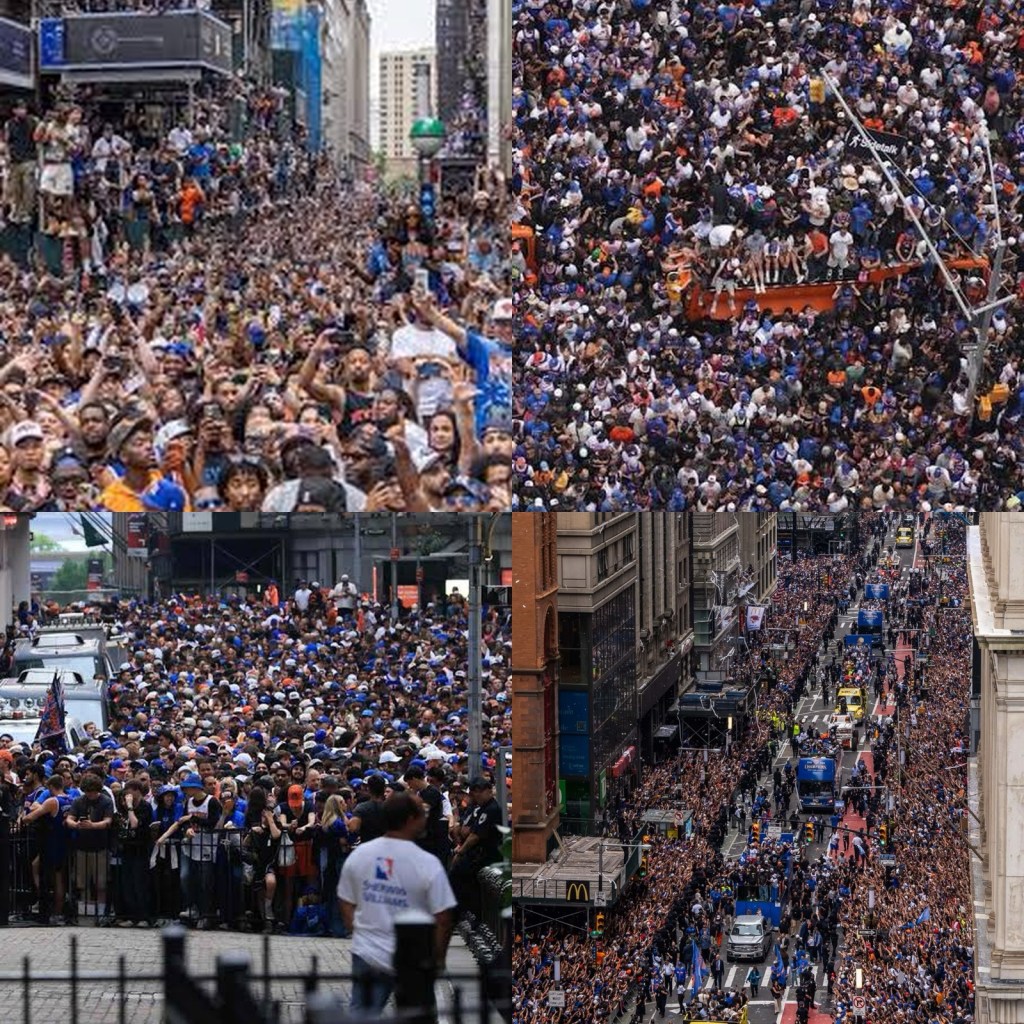
Two million people, all deserving of this moment.
Brunson. The newest Knick legend.
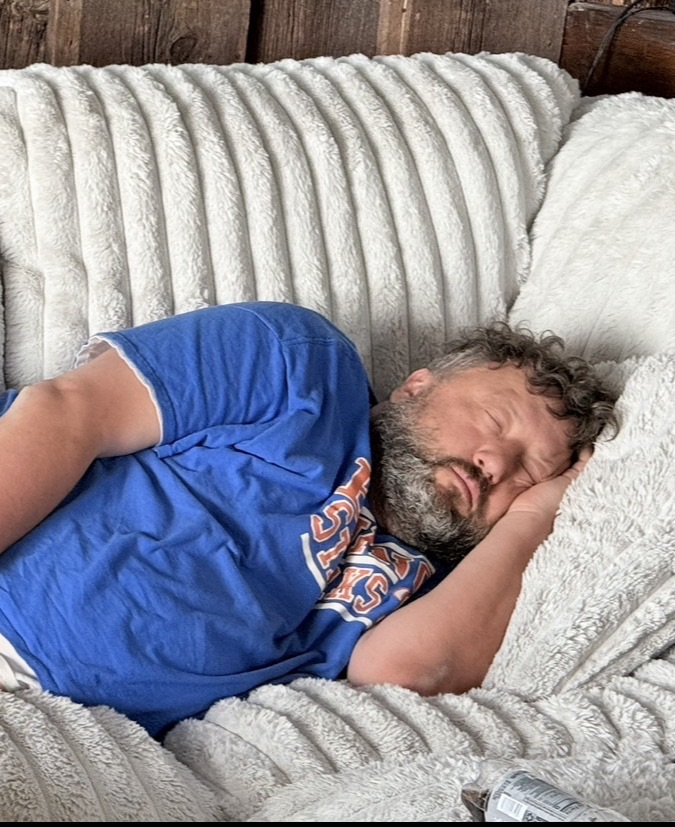
New York City and us Knicks fans deserved this. It’s been a bit of a dream come true. (Thanks for the photo, Kim. At least I’m in my “Ewing / Starks ’94” t-shirt.)


Leave a Reply