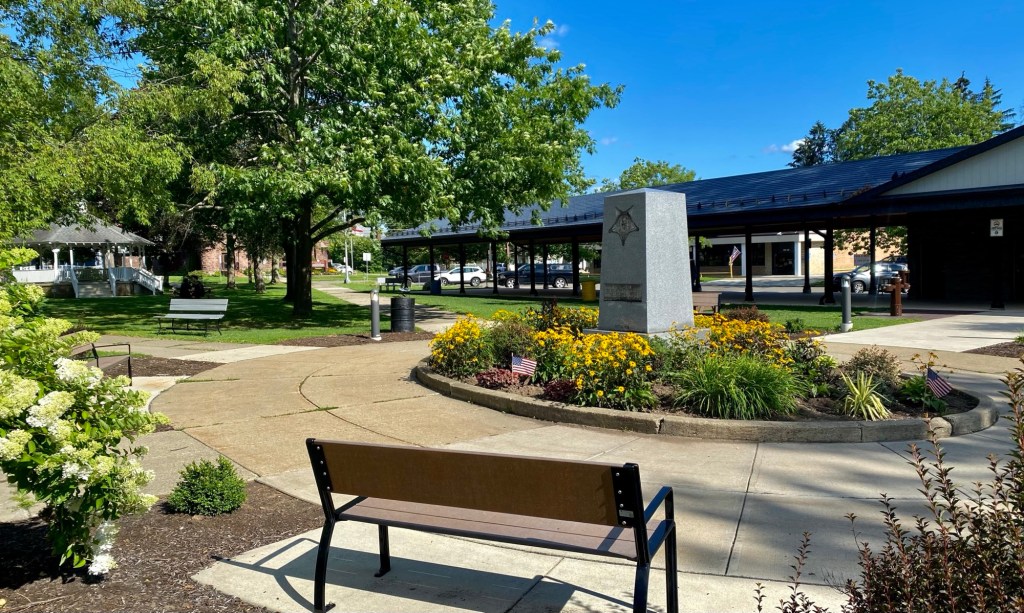
I haven’t had a lot of time to be a part of the Olean community lately. There are a couple of good reasons for it – one is that I’ve spent a lot of time doing other things, whether it’s been vacationing or work (mostly work). There’s been a lot on the plate, and ultimately, after work and family duties, time runs out. However, it doesn’t mean I’m not aware of what is going on in town.
The algorithms for Facebook’s Olean-area content have been pretty rough to read through lately. Things caught fire on Wednesday, July 29th, when a city employee was allegedly menaced (Olean Mayor Amy Sherburne’s words in her first official press release on the issue) in Lincoln Park early in the morning. (If you’re unaware, a lot of the parking reserved from city employees is located on South Street, so people parking there have to walk across Lincoln Park and then cross East State Street to get to the city building.)
People were upset, and justifiably so – incidents that happen in the middle of the city to a public servant in broad daylight are always going to move the needle in the wrong direction. It’s an automatic thing that the public feels less safe in these situations, even in instances when these incidents are isolated.
Unfortunately, it’s not that isolated. There are multiple city employees that say they have felt unsafe walking from Lincoln Park to the city building; they often choose to walk in groups, rather than individually. There were also a lot of posts online stating that these issues have been going on for a while, and people are particularly upset that it became a much larger topic because of the “who” (a city employee) and “when” as much as anything.
This public awareness has led to a heightened sense of concern for safety in the Olean community; it particularly manifests itself on social media. There is a lot of focus on four issues in particular – crime, substance use concerns, mental health, and homelessness. However, the discourse itself presents a fifth issue surrounding this, which is the public response.
I never know exactly what to make of crime data at any given time. There are certain hard numbers that are easy to discern – for instance, the number of murders is a pretty clear and consistent standard. However, there are many numbers that are less exact – for instance, crimes like physical and sexual assault are frequently unreported or underreported, or no arrest can be made because there is no clarity as to what happened.
One thing I do know is that Olean has a problem with property crime. The reported crime statistics from numerous sources state that the property crime rate in Olean is significantly higher than the national average, and there is plenty of anecdotal evidence to support it. There are warnings every couple years to the community to lock their cars when they are unattended because there are people going around town and rifling through vehicles at night. There are plenty of videos of porch bandits taking packages from houses – unfortunately, it doesn’t stop them from doing it. People often complain of their homes, vehicles, and other property being damaged by others without any acknowledgement or responsibility taken by the perpetrator. Businesses in the area are constantly fighting issues of larceny. I hear stories of people trying to collect any bicycle that exists in the city, then leaving them clearly visible on their own property. Obviously, none of this is acceptable.
Property crime makes people angry. On the other hand, an alleged assault like the one on July 29th feels invasive and personal, even if the perpetrator and victim are unnamed and faceless. No one wants to feel unsafe, and that becomes the issue when a very prominent assault occurs. Really, it’s not even an issue of whether a person is actually safe or not; the issue is the person’s sense of it. With safety, perception is everything.
For instance, consider New York City. The city was legitimately dangerous for a few decades. There were 2,262 murders in the city back in 1990, which meant about 31 out of every 100,000 residents were victims. In contrast, in 2025, there were 305 murders, or about 3.5 per 100,000. That’s lower than the national average, which is also at historic lows. Property crimes are also lower than ever, and the Housing Authority reports that there have been fewer safety issues than ever this year.
However, people unfamiliar with the city have a much different view. That’s because all the news and news-adjacent networks are located there, and the media tends to focus on what’s immediately around them – after all, you don’t need to find a correspondent to travel to the story, as opposed to some place like Carroll, Iowa (nothing happened there, just throwing out a random city on the Great Plains). The average New Yorker feels safe in most parts of the city – otherwise, you wouldn’t have seen millions of people of all backgrounds and socioeconomic status filling the streets of Manhattan to watch the Knicks playoff games together and sing “Empire State of Mind” (Jay-Z and Alicia Keys) in unison. People aren’t wandering into the Queensbridge Projects at night, but midtown Manhattan is vibrant and bustling at all hours, and most neighborhoods are relatively safe as long as you take the normal precautions you’d take in small-town America.
When it comes to media perspective, it affects Olean significantly as well, but to the other extreme. The Olean Times Herald is down to delivery three days per week; they update online five days per week, but if something happens Saturday afternoon, it’s 2 1⁄2 days out from the next update of the website or the paper hitting your mailbox. They’re victims of the death spiral that many traditional media outlets are facing: the old model isn’t financially viable any longer. Fewer people buy physical newspapers; fewer subscribers means less revenue from selling copies; that also leads to fewer advertisers; they then need to cut the number of employees to make ends meet; the subscription price also has to go up; there’s less local news coverage; then there’s less incentive to buy the local paper; it can go on forever. It’s unfortunate, but they’re not alone in this issue – it’s also happening in major cities. For instance, Atlanta is the sixth-largest metropolitan area in the United States, with about 6½ million people living there; its primary newspaper, the Journal-Constitution, went completely digital at the beginning of 2026.
Television coverage for the Olean area comes out of Buffalo. The local news is facing the same issue as the newspaper industry – people do not consume television the way they once did, and with more options of where to get your news from, there are fewer eyes. It takes a major story to get the television outlets from Buffalo to come south and cover it – after all, it’s 90 minutes one-way from downtown Buffalo to Olean, and those three hours spent on the round-trip could be dedicated to footage from another story, rather than drive time. Simply put, it’s a financial decision.
As a former employee in the radio business around the Olean area, I can assure you this – there is no true newsroom at the immediate area’s one local radio station cluster (Pop Radio, the Big Pig, Big Oly, The Goat – they’re all owned by Seven Mountains Media). One of the local stations is catered to the area, but the on-air personalities are actually located hours from Olean. Most mic breaks are prerecorded material. Once again, it’s a financial issue; there are a lot of streaming alternatives, and with SiriusXM installed in most cars, the listening possibilities are endless and not reliant on the curvature of the earth, the wavelength of the signal, or the surrounding terrain.
None of these outlets have any hope of keeping up with social media’s ability to disseminate a story quickly. Social media has some things that are good; unfortunately, most people consume the information provided in the wrong way. I have no problems with the way Facebook works, but a majority of the information out there is often one person’s opinion and not reliant on journalistic standards. We question the slant of the larger media outlets all the time, but sometimes take Facebook posts from someone we do not know as dogma. The post is an insight into someone’s perception, and there is often greater context to everything; however, there’s no one vetting Facebook posts, worrying about the ramifications of what is being put out there, or even giving it a moment to step back from the situation and gain perspective – instead it’s a thought, a posting, and available for the world to see.
I try to impress upon people to avoid sending written things out when your emotions are high, because once you send it out there, you can’t retract it, and there’s always copies and screenshots available. You can write it out, but it’s often better to give it some time afterwards and read it back over when you’re less emotional about the situation before sending it out to the world. If you use that approach, you often revise what you’ve written, and sometimes, you recognize that writing it out was what you needed more than anything else, because sending it out does nothing worthwhile.
Posting a grievance on Facebook is frequently the antithesis of that, and it creates a totally different monster – it offers people the chance to submit their opinion on the person who posted their frustration, and people will go in hard, especially when they don’t know the original poster or have a connection to the target of the post. This only makes things worse.
Going back to the July 29th incident in Lincoln Park, the original Facebook posting I saw about it was simply “Woman threatens city employee with a knife in Lincoln Park, Olean.” I would argue that there is very little slant in that statement. The comment section? That was vitriolic.
Crime is and has always been a problem in Olean – unfortunately, it is an issue everywhere in one way or another. There are certain neighborhoods that have dealt with bad reputations due to crime for as long as I’ve been alive, and there is one park that everyone has known as a hotspot for illegal activity for decades. My dad hardwired me from a young age (back in the early 1980s) to lock our car doors whenever we left them unattended because there were always issues with people rifling through cars in the city. Assaults happened all the time, including a few brutal ones that occurred during my high school years that never crept out to the newspaper. I also remember seeing a prominent Olean resident (now deceased) driving their car recklessly along North Union Street during the late hours of the night on multiple occasions, which I guessed was because they were under the influence of alcohol; I doubt I was alone in witnessing that. However, we now hear concerns and share opinions with the masses. We also get full access to lesser grievances, such an argument that started over napkins, including images and video to reinforce each side’s opinion. (Surveillance culture is on my list of future topics.) The access allows us to create confirmation bias – what we believe to be true can be reinforced by finding something to back it, even if it’s the exception rather than the usual outcome. (Another blog topic for the future.)
Despite what some say, I’m not convinced that Olean is the worst it’s ever been – after all, the legend of organized crime’s connection to the city does exist, and although that can create safety in one sense (nothing happens without permission), it creates other safety issues, especially when different factions get into major conflict or someone disobeys the unwritten rules that exist.
The point is, ignorance can be bliss, and in today’s world, it’s hard to avoid the chatter of what’s going on out there. As long as people feel unsafe, there is a crime problem, regardless of raw data.

Substance use is a difficult topic to tackle. This is another long-standing issue; however, it’s become more deadly than ever.
Once again, the videos are out there – people looking like they’re struggling to stay conscious in broad daylight outside of local businesses; reports of calls for the paramedics coming over the scanner; arrests for criminal possession and/or criminal sale of a controlled substance; and sudden deaths of people who have otherwise seemed perfectly healthy.
There’s no simple solution to it. First of all, people have to want to get clean, and it’s not something you can force upon anyone. People can be forced into treatment or be incarcerated, but unless they make getting clean their goal, they usually bide their time until they’re free to go back to using again.
Nobody will admit it, but the amount of drugs confiscated by the various law enforcement agencies rarely creates an issue for people attempting to obtain it. As long as people are looking to use them, there will be someone out there to provide them with their substance of choice. The real goal is to end the demand, and it feels like we’re not getting very far with it.
I know that there has been a lot of work done to try to convince people to abstain. After all, substance use prevention lessons are part of the state-mandated health education curriculum in New York, and it’s integrated from kindergarten onward. Laws have been crafted to penalize people illegally selling drugs, and the court system has a specialized track to try and help those struggling with addiction issues.
Unfortunately, the trend of intoxicating substance use is generally headed in the wrong direction.
Marijuana use is normalized in youth at this point. A large part of it is that it has been legalized in more and more states; as of July 1st, 2026, 24 states and the District of Columbia have legalized recreational use, and another seven states have decriminalized it. 41 states have comprehensive medical cannabis programs. It is easily accessible, and it’s not seen as taboo in any way, shape, or form by many people, despite the school-aged education provided around it. It is not an issue associated with a particular demographic or person of socioeconomic status any longer. For young adults, it is as common to use marijuana at the end of the day as it is for older generations to have a drink at dinner.
The statistics bear that out. Past-year marijuana use was acknowledged by about 4.1% of adults during the early 2000s; in 2024-25, that number was up to 23%. About 17% of American adults are regular users, which actually outpaces the number of cigarette smokers (12%, although vaping is trending up quickly as its replacement). The fastest-growing demographic for use is people over 55, which seems to be a result of legalization laws being enacted throughout the country.
At this point, a lot of people are accepting of recreational marijuana use, and it seems to have led the push to legalize use in this country, rather than the other way around. Marijuana got a reputation during the height of the War on Drugs as a “gateway drug”, but I’m not convinced that is the one intoxicant that leads to addiction to the deadly substances; I’d argue that distinction belongs to prescription medications, which are also very accessible.
The Centers of Disease Control have been tracking deaths by overdose since 1968. Death by overdose was at its lowest rate between 1979-1984, where overdose deaths were hovering in the 1.1-1.3 deaths per 100,000 persons range. It slowly crept up to the mid-threes by 1998; in 1999, the rate began to explode (6.1). The rate increased almost every year from then until 2022, when it reached a peak of 110,900 deaths, or a rate of 33.2 per 100,000.
I see a definite correlation that can explain why overdose deaths have skyrocketed over the past 30 years: OxyContin was approved by the Food and Drug Administration in 1995.
Oxycodone, the active ingredient, was first synthesized in a laboratory in Germany in 1916, and its first clinical use was the following year. It became especially popular as a painkiller with the Axis in World War II, and was noted as one of the two drugs of choice by his physician, with the other being amphetamines, now prescribed as Adderall, which is often prescribed to treat the symptoms of Attention Deficit / Hyperactivity Disorder. (Ironically, one of the two chemists to first synthesize oxycodone, Edmund Speyer, was a victim of the Holocaust in 1942.) It had been classified as a Schedule II controlled substance in the United States in 1970, which meant the government recognized it as a substance that can cause severe physical and mental addiction.
OxyContin allowed for it to be an extended-release medication (Contin is short for continuous). The FDA approved it for prescription without any long-range studies or assessment of its addictive capabilities, which we now recognize as the major issue with the medication. The developer of OxyContin, Purdue Pharma, went on a full-blitz marketing campaign for it; the company ended up creating $35 billion in revenue from the drug alone. Eventually, a class-action lawsuit over OxyContin ended up forcing the company to shut down and its assets to be sold, but the family that owned Purdue Pharma, the Sacklers, still have an estimated net worth of $4.5 billion.
There are plenty of other opioids now out there to treat pain, including hydrocodone, fentanyl, morphine, and tramadol, with dozens of different formulations to provide an array of names to remember.
There are also a lot of people out there that have the ability to be more functional because these medications relieve some significant, chronic pain, and once again, I have no issue with that. I know several people who benefit from being prescribed opioids, and in no way does that mean they have a problem; instead, they have a solution. The real concern with the rise of the drug being prescribed was that there were doctors that were overly willing to prescribe, even when it became obvious that it was highly addictive, and that people knew which doctors to target and what to say so they could obtain a prescription.
About ⅔ of overdose deaths over the past two decades in this country have been related to opioid consumption. In 2019, there were 46.8 prescriptions of opioids distributed per 100 people that year; a large percentage of those prescriptions were for people that used it continually to manage pain, but there were plenty of people that obtained one-time prescriptions, as well. That rate has dropped to 35.4 per 100 people as of 2024 – meaning there were 24% fewer prescriptions filled now. A significant number of controls have been put in place to minimize the supply of prescribed opioids out there, and it has been effective, as overdose deaths have fallen by nearly 40% in the past four years. Still, the damage has been done.
My big concerns with substance use come from a different perspective. First of all, I’ve done a lot of research on understanding the workings of our brains, and the studies repeatedly state that our brains do not finish developing until our mid-20s. (It makes me regret all the nights of drinking before hitting that age.) What’s even more concerning is that most of the products out there, including those sold through the less-regulated dispensaries (please read between the lines), are laced with dangerous substances that you cannot be aware of. I’ve seen multiple youths I work with test positive for fentanyl use, and are legitimately shocked by it because they insist that the only thing they’ve done is hit a dab pen. Are they being honest? I don’t know, but there is a realistic possibility that it’s true, and it seems that people will lace any intoxicating substance if it means it will drive up demand for further use. It’s hard to disseminate what has been appropriately developed and what is laced, and therefore, unless they’ve cultivated it themselves (of course, the youths have not), there’s no guarantee that an edible or some other consumable form of THC will not lead to an overdose caused by another substance.
This is not meant to be a scare tactic. I’m around high-school aged kids all the time, and this is the reality they present to me, even though they know I have a role in figuring out how to have them avoid using and having access to these substances.
When it comes to the actions of a person in the middle of addiction, I’ve had an interesting enlightenment on the topic. I’ve been running into a lot of Hunter Biden’s public content recently. He’s been doing multiple podcasts and interviews talking about a variety of things, and there is a lot of content on his past use and his current work on staying sober. He acknowledges that his drug use wrecked his relationships with his grown kids, his first wife, and his father, even though they did all they could to try and lead him towards recovery. He has said numerous times that at one point he was smoking crack “every 15 minutes”. He became a liability to everyone around him, and he admitted that it didn’t matter to him. He’s currently sober, and talks a lot about rebuilding his relationships with his loved ones, but that in the moment of use, nothing mattered more than chasing the next buzz. He also talks about a lot of purposeful acts he engages in to ward off the current temptation of relapse. It is not unlike many other stories I’ve heard from other people that have battled addiction, and my hope is that anyone that is choosing to fight this battle can keep winning it.
There are inpatient and outpatient treatment options, support groups, and other options out there to support people that want to get clean, but the whole part is having the addicted to want to get clean, then to stay clean.
As a Licensed Clinical Social Worker, I’m going to keep the mental health aspect of the issue limited to a few simple thoughts, rather than start a 350,000-word diatribe. Please consider:
- The mantra “mental health is health” is a current catchphrase, but I see a definite divide in making that a belief, with that line falling between the Millennials and the Zoomers (roughly around the age of 30). People are often glad to suggest they worry about others’ mental health, but refuse to acknowledge or confront their own issues. I honestly believe that anyone can benefit from having a chance to attend therapy, and not as a way to drum up business – I’m perfectly content working where I do – but as a chance to feel less emotional weight. It’s far from an acknowledgement of weakness or mental illness – I feel that the chance to work through things on your mind without someone’s own agenda involved actually helps prevent issues. I feel that a check-up with a mental health professional should be seen as something similar to a regular check-up with the doctor – it can prevent issues from festering. I don’t expect that to catch on, but I think it could make a difference.
- There has been a strong move away from institutionalization for numerous reasons, but the financial cost is a huge factor. The online cost estimates of how much one day of inpatient psychiatric care varies depending on the facility and the source, but the lowest cost I saw for it nationwide was around $500 per day, or right around $180,000 per year. It tends to be double that in New York. The cost to incarcerate a person at the state prisons? In New York, it’s about $315 per day, or $115,000 per year. Mind you, it costs more in New York to incarcerate someone than it does in most other states – some in the Deep South have it in the $20,000 – 30,000 range. Ugh. I find this whole paragraph disappointing.
- Posttraumatic stress disorder (PTSD) is not an organic disorder. A lot of people that are having significant mental health problems have experienced a ton of trauma as well. A big part of it to understand is that ultimately, it’s not about the event, it’s about what the person experienced.
- People can recover and learn to function fully while dealing with mental health concerns as long as they have support and a willingness to take care of themselves. A chemical imbalance is not a flaw; it’s a challenge that can be addressed.
Homelessness is not an isolated issue, and it is definitely on the rise.
One major issue is the affordability of housing. This is not a political point; it’s a reality of things when you look at the numbers. The median income for a working American is currently $30.88 per hour, according to the US Bureau of Labor Statistics; a 40-hour workweek would lead to an annual income of $64,230 before taxes. The median house price? Currently around $410,000, according to the Census Bureau. The 20% down payment on the house, along with a 3% addition of closing costs, equals just shy of $95,000. If you have a two-income household working 40 hours per week, that down payment is nearly one year’s after-tax income. If you take out a 30-year mortgage at a 6.5% interest rate (which is below the current national average rate of about 6.71% at the moment), your payment is $2,073 without property taxes and homeowner’s insurance escrowed in. There are loans through agencies such as the Veteran’s Administration or the Federal Housing Administration that can get you in a house with a smaller down payment and lower interest rate, but it usually doesn’t change the monthly payment when the changes in interest rate and principal balance are all factored in.
Of course, Olean is not anywhere near the national average when it comes to average price for a home; Realtor.com listed the median house price to be somewhere around $145,000 in August 2026; using the same formulation as above, that means a down payment and closing costs on a house in the area is in the range of $35,000 and the mortgage payment for a similar interest rate and length is $733 per month. That is a huge difference. However, there’s a few other things to consider with that:
- The median wage in Olean is $24.41 per hour, according to ZipRecruiter. Yearly, that’s $50,773 before taxes if the person actually works a 40-hour workweek (a lot of people do not).
- Property taxes are much higher in Olean than down south. In Myrtle Beach, SC (I was just there on vacation, so it was easy to research), someone who owns and primarily lives in their $400,000 home pays in the range of $1,500-2,200 per year. In Olean, that $145,000 pays at least $3,500 in property taxes per year. (It would be easy to blame Albany, but the federal government has a lot to do with that disparity, as well. It’s another future topic.)
- The price of car payments, fuel, heating and cooling, all kinds of insurance, groceries, and utilities are essentially a wash, if not a little higher in Western New York.
When you work the math, making $24.41 per hour means you make about $900 less per month than the national average. Ultimately, you’re not ending up further ahead in discretionary income, regardless of where you live.
That issue also trickles down to people who rent; after all, only 55.1% of houses in Olean are owner-occupied, and 26.7% of the population lives in poverty, according to the Census Bureau. Landlords have to pay on their property, too, and they’re generally going to focus on maximizing their bottom line, whether it’s increasing rents to fit market rate, minimizing how much work they put into a rental property, or a combination of the two. There are plenty of good landlords who do the best they can for their tenants, but in the end, they are in business, and one of the first things they teach you when you’re in a freshman-level business class in college is that the purpose of a business is to maximize its value for the sake of ownership. If their costs go up, they pass them along. Ultimately, the cost of housing, regardless of your status, has gone way up compared to what people’s overall income is.
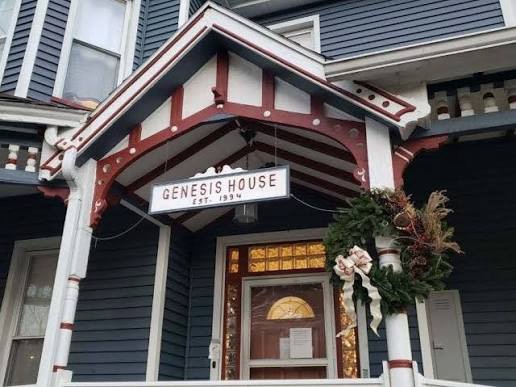
Homelessness has generally stayed off-the-radar to most people in the Olean area until recently because a lot of agencies have banded together in the community to make sure that people have not had to camp out. The Genesis House, Olean’s most prominent shelter, has been operating since 1995; however, they are far from alone in helping with homelessness. The Department of Social Services will put the homeless up in shelters, especially when Code Blue alerts are in place. There are other nonprofits that also help with providing shelter, such as Connecting Communities in Action, which provides housing for victims of domestic violence.
The numbers are surprising if you’ve never paid attention. Cattaraugus County DSS stated they dealt with a total of 467 individuals and family members experiencing homelessness in 2025. The current county population is estimated to be around 75,400; that puts the county below New York State’s overall average but above the national average. The Genesis House helped 108 individual adults and 11 families (that included a total of 18 children) in 2025; obviously, they couldn’t accommodate all of the homeless that were in the county last year. Additionally, 74% of the people that applied as homeless were reporting that this was their first episode without a home, meaning that it is not a chronic issue for everyone without a place.
This is not a problem that is isolated in Olean, either. The reports come from other municipalities throughout the Southern Tier as well as other small cities throughout the Northeast and Great Lakes region. My supervisor took me and some of my coworkers for a ride on the Erie Canal in Lockport for our teambuilding day in May 2025; one of the nurses pointed out encampments set up along the banks of the canal in the middle of the downtown core. The Jamestown Post-Journal frequently runs articles on their city’s issue. There was a series of threads from my Belmont-area friends about a person living outside during July that was tearing through the dumpsters of multiple businesses. I’ve seen discussions about it from friends and newspapers in Salamanca, Corning, Binghamton, Elmira, and Geneva; in Bradford, Erie, Harrisburg, and Lancaster in Pennsylvania; and all sorts of other places that I have friends now living in.
The homeless are unfortunately an accepted part of the scenery in a lot of major cities. There’s tons of news coverage on the issue as it presents in the major East Coast and West Coast cities – for instance, I saw a recent article about homeless encampments in sections of Manhattan that people may never recognize. I had a recent taste of it when I was in Honolulu with Kim July 27 – August 4. On our first full day there, we had not made the full adjustment to the time change (six hours); therefore, we were up plenty early to go to the beach and watch the sun rise at 6:18 AM. Afterwards, we walked around our section of Waikiki, in part to find a place to eat. Hawai’i is definitely on island time – there’s no place for a sit-down breakfast before 7:30 AM. Therefore, the streets were quiet, and the homeless were still very visibly camped out. It was not just adults flying solo; I saw a couple families with children. It had rained the night before, so many were set up under the awnings of businesses in the district. The police were out and patrolling, but they were not chasing the homeless away; they were just making sure there were no problems. In doing some reading and talking with locals there, most homeless in O’ahu actually camp along the island’s North Shore instead of in the city itself.
The real issue that people seem to be upset about right now is that there has been a large population camping out, as opposed to being indoors. There is some choice of living outside that goes along with that, but it is not always as clear as people might think. Yes, I know that the rules that come along with living in some sort of temporary housing can be a dealbreaker. People that are addicted aren’t as concerned with staying out of the elements as they are with their ability to use. Others are unwilling to stick with the rules in place. There’s a sector that is unwilling to ask for help and would rather figure it out on their own. Sometimes, it’s also about protecting their property, as they can’t bring some of their belongings with them.
The final one is an issue that people discount. The poorest people have very few possessions of their own, and expecting them to give them up for a place to sleep can be asking a lot out of them. Even if you find it worthless, it has some value to them, and that means something.
This attachment to personal belongings brings to mind Dolly, a one-hour variety show starring Dolly Parton that aired for one season, 1987-88, on ABC. (I had to look up what year it was, but I distinctly remember the network.) My dad, a huge fan of hers, would faithfully watch it every Sunday night, and since we had only one television, that was what I would have to watch if I couldn’t find something else to amuse me. It was an entertaining show – she’d bring out multiple celebrities, have a bunch of different skits, and interact with the studio audience before ending the show with “I Will Always Love You” (no hate on Whitney, but her version has its own beauty.) Some of those skits would involve her telling stories from her past. For the Christmas episode, she referenced her memories of the holiday while growing up in the Smoky Mountains with her parents and 10 siblings in a one-room cabin. Her joys in life? A corn cob doll, and the orange that she’d get as a Christmas present. Yes, that was it.
In our day and age, we’d scoff at the idea of the doll having value and deem it easily replaceable. For her, it was all she had, and it came from her family, which meant it was everything to her, even as she went on to have hundreds of millions of dollars.
We don’t always know why people keep certain things, but there is a reason for them to have a sentimental attachment to them.
A lot of the homeless also have animals that they fiercely protect. Going into a temporary homeless shelter may mean permanently giving up the pets. That might seem like a rational decision to make for some people, but there are a lot of others that recognize how awful losing that beloved animal may be. There are a lot of cat and dog owners that are very attached to their pets. I know it too well; Max and Miley, our two Goldendoodles, are probably more important to our family dynamic than any of our possessions, and my kids have each latched on to a cat (Ben with Oscar, Ellie with Cleo). I had friends whose parents would get mad if you referred to their canine as a dog, rather than a family member. I also dealt with a case during my first couple of years at Allegany County DSS where a family that lacked transportation camping several miles away from any retail establishments in September left the county altogether, rather than enter housing, because it would have meant having the SPCA take their dogs
There’s another, more recent story of mine that also comes to mind. In the late fall of 2025, I was headed west to my agency’s Randolph campus, and as I prepared to get off of I-86 at the Steamburg / Onoville exit (Exit 17), a crossover SUV was parked in the middle of the off-ramp, about 250 feet from its beginning. A couple of people were standing in the grass between the highway and the offramp. I pulled over, and discovered that it was a coworker’s car; they had struck a dog that had wandered onto the road, and a passerby was there with them as they were comforting the dog. The dog didn’t survive very long. Law enforcement and the animal control officer responded shortly after, and the animal control officer knew where to find the owner. The trooper that responded went and picked up the owner, who lived just off of the expressway. She was obviously devastated; however, the piece that I took away from her immediate grief was that the dog was the only companion she had when she was homeless and at her lowest.
I don’t know how I can better illustrate my point. It’s not as simple as “just follow the rules”, because even someone that follows rules and laws religiously may not be able to accept the rule that removes the thing that helps them get by more than anything else. A lot of people stress concerns about the mental health of the population as a whole; it’s a contradiction to expect the most vulnerable to give up the one thing that best helps them maintain their sanity.

There’s work to do for everyone to do if we’re going to at least begin to move the needle in the right direction on this issue.
First of all, it’s important that everyone recognizes the laws, regulations, ordinances, and rules in place. You don’t have to like them, and you’re free to disobey them at your own risk, but they create a structure for society to function.
The city of Olean has ordinances about when the parks are open to the public – 6 AM to 10 PM daily. Also, people need to make sure they are not trespassing on other people’s property. Additionally, there are state laws involving camping and creating fires near waterways on publicly owned land. I know this eliminates nearly all of the places that the encampments and homeless are setting up shop, but laws are in place for the common good, regardless of circumstance.
That being said, moving the homeless people out of one town or another is not the solution, either. Most of them have set up shop in the area they chose for a number of reasons, mostly related to a lack of transportation. In Olean, along with most of the other municipalities I listed, by being in town, they are near shopping centers, health care, the scarce rural public transit options, and a concentration of charitable organizations, as well as the offices of the local Department of Social Services.
I’ve seen the issues with people lacking transportation and stuck in housing outside of a hamlet, village, or city – anything and everything is hard. A lot of those people are resourceful – you’d be amazed how some of these trailer parks in the middle of nowhere manage to function as a community, often better than those of us with the means to help each other out. However, if you’re isolated, it often means walking miles to get to the store or any other basic necessity. Moving is often not an option – they can’t afford to do so, and they wouldn’t have a way to get from place to place, even if they could make the finances to move work.
Suggestions have been floated about how charitable organizations and the community can address the issues, but when push comes to shove, people don’t want to accept some of the solutions. No one wants any project that may be detrimental to property values or create problems in their neighborhood – it’s happened here in town during the past decade. The problem is that it is always going to be an issue for some neighborhood, no matter where you put it.
Also, people are upset because they’ve put restrictions on use of the facilities in Lincoln Park – specifically, the gazebo and the restrooms in the pavilion. I’m not sure that’s going to solve anything when it comes to the issue at hand, but we elect leaders to make those decisions, whether those decisions are popular and/or effective or not.
I see one glaring issue with this entire approach to addressing the concerns in town, and it is that the people that are being identified as part of the problem – the homeless – are not being engaged in this process.
I wouldn’t expect a majority of them to engage in the discussion – they’d probably be wary of anything of the sort, especially if they are content with their current condition or feel the system has already failed them (and they’d be justified in doing so). However, the American way involves freedom – the phrase “life, liberty, and the pursuit of happiness” is written into the Declaration of Independence. People never want to feel oppressed or lacking a voice – after all, that’s why the nation came into existence in the first place. People are adamant about asserting their own rights, especially the constitutional ones; to dismiss the rights of others because of their circumstances is hypocritical, and, on top of it, is punching down at the less fortunate. In schools, that’s classified as bullying.
Don’t kid yourself, either – there are some issues when it comes to rights in this whole approach. On August 25th, the city passed an ordinance to prohibit camping or sleeping in public places within the city limits. The intent is good, but expecting a series of progressively higher fines to work to deter people that have no place to go (which for most is in part due to a lack of money) is not only counterintuitive, it also runs into a potential legal challenge. Yes, $50 might not seem over-the-top, but it doesn’t get anyone closer to affording a security deposit.
We know the reality – we tend to show less investment in something when it’s not our decision, even when we’re told it is in our best interests. Dictating the course of action to the affected is unlikely to be fully effective in moving this problem towards a long-term resolution.
Reconvening the city’s Homelessness Task Force should be helpful. The city government caught on two years ago that homelessness was becoming an issue, hence the reason for creating it. It’s not necessarily true that its dormancy is what led to the issue becoming a flashpoint this summer, but its absence created a chance to assign blame. Hopefully this is a lesson learned.
We also need to make sure that the gaps in service that are a part of the homelessness issue are being addressed, and there’s no better way to do that than to have a couple of the currently or formerly affected at the table. I’m not suggesting that we bloat the committee, but most of the agencies on the committee are regulatory or governmental, and at some point, you run the risk of losing sight of the issue without having people that intrinsically understand what is going on. I don’t know a particular person that fits the bill, but I’m sure there are ways to find a person or two that can sit on the committee and explain the issue in an effective manner.
Like I said before, it’s not acceptable to violate laws or ordinances – property rights need to be respected, and terrorizing the general public is flat-out wrong. Littering is a no-go, and creating massive safety issues by leaving things like syringes (presumably dirty ones) around can’t happen. It’s not easy to be in the position of homelessness, but it’s also important that you avoid drawing any more ire or disdain, especially given that many already feel that way.
I guess my biggest concern comes down to the morality involved in the situation. Most of us derive a large part of our morality from our religious or spiritual beliefs. Mind you, religion and morality are not tied together – there are many atheists and agnostics that have strong moral compasses, and atheists are a smaller percentage of the prison population than they are in the general population. However, many people develop a large part of their moral system from their religious practice, and faith is an important part of many people’s lives.
Freedom of religion is a First Amendment right; however, we are a majority-Christian nation. According to the Pew Institute, in 2025, 45% of Americans identify as Protestant (with about half falling into the evangelical category), 22% identify as Catholic, and another 3% practice as Latter Day Saints, Orthodox Christians, or some other denomination that is based in Christianity. About 21% identify as having no religion, and the final 9% fall into groups such as Judaism, Islam, Hindu, and Buddhist, among others. (Interestingly enough, these numbers have stayed steady in the past decade, despite what some people say.)
I think the interesting part of Christianity is that the lessons taught and practiced can be wildly different, usually depending upon the voice at the pulpit and the choice of how to interpret the teachings provided. There are wildly different interpretations of what the Bible communicates and how it should be understood – there are people who interpret everything literally, and others who view it as a guideline for behavior as much as anything else. In a lot of churches, you may get multiple opinions on what morality is as you go from person to person in the same pew. Ultimately, everyone tries to find their own path to behaving appropriately.
I have been a Catholic my entire life. I am not someone that is pushy about my faith – I very much believe that we all have our own path – but it is important to me personally. Yes, there are issues in the church, and they have existed in different forms for two millennia – one of my lessons to youths I work with is that people find ways to screw up perfectly good things. However, that does not affect my takeaway of what I find most important morally. I am constantly reminding my two children of the Golden Rule – “do unto others”, and frequently think about the teachings of the Beatitudes when it comes to approaching others.
The point is that I hope we ultimately find a way to do right for everyone involved. It’s taken me about 8,000 words to get here, and for good reason – this is an insanely complex issue. My basic concern is that the community approaches this whole situation humanely. I have no question that as a society, we are up to that – I’ve seen us rise up repeatedly when people are in a bad spot. The Olean community regularly does a good job looking out for the less fortunate, and I believe that can happen in this situation.
This may be a trying situation, but we need to make sure we treat everyone with dignity, even if some are unable to do that very well for themselves.


Leave a Reply